
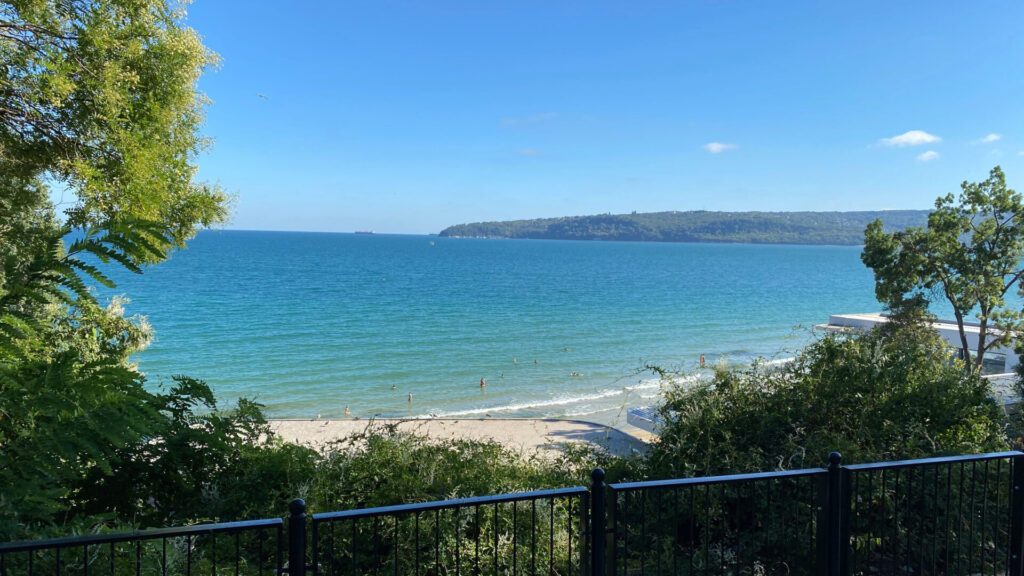
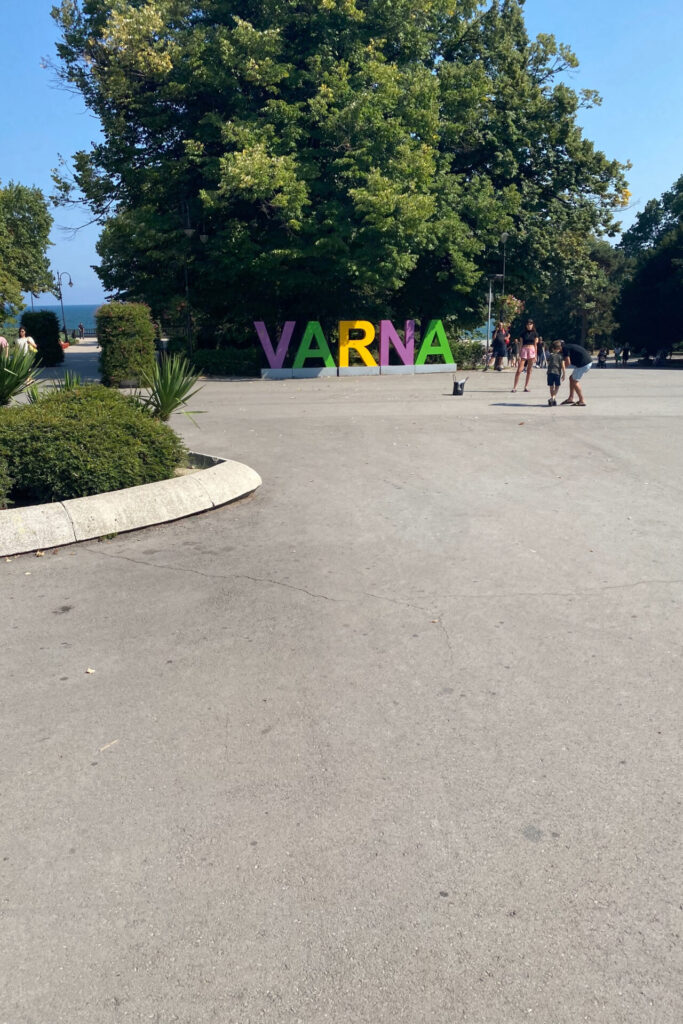
Most travellers will have only heard of Bulgaria’s large cities like Plovdiv and Sofia, or the beach resort of Sunny Beach; however, along the Black Sea coast, you’ll find one of the country’s hidden gems. Varna is already a popular holiday destination for nearby Balkan countries and for good reason. Not only do you have gorgeous weather and beach bars, but also plenty of historical monuments, some dating back to the 2nd Century. In our guide, we’ll delve into the reasons why Varna should be next on your list and how to spend your time here wisely.
How to reach Varna
You can easily fly to Varna from the UK, with direct flights year-round from Wizz Air at London Luton (LTN). There are seasonal flights or charters from providers like Jet2 and TUI from Manchester and London Stansted (usually from May to September).
Flight times typically come in at around 3 hours and 30 minutes. The time difference is typically two hours ahead of the UK. Passports must have been issued less than 10 years before the date you enter Bulgaria, and must be valid for at least another three months the day after you leave. As Bulgaria now follows Schengen rules, your time here counts towards your 90 days in any 180-day period. You should also remember to bring your GHIC or EHIC and take out a robust travel insurance policy before you travel.
It’s worth noting that, as of April 2026, the Entry/Exit System (EES) is in operation. You will likely be required to have your fingerprints scanned and have a photo taken at border control the first time you enter. While it’s not yet launched, if you choose to travel in the future, you may need to fill out an ETIAS application.
Since February 2026, Bulgaria’s official currency is the Euro. You can no longer use Lev, but you can exchange them for Euros at Bulgarian banks and post offices for free until June 30th 2026. You can also pay by contactless credit card in most bars and restaurants.
How to get around Varna
While it’s highly manageable to walk through Varna to reach places on your list, it does have an extensive network operated by Gradski Transport.
Bus
The 409 bus is the line you’ll need to use to get to and from Varna Airport and the city centre. You can buy your tickets from the machines nearby or at major stops. The city has updated the machines to accept Euros and contactless cards. You can also download the busVarna app to help you track incoming buses and plan your routes accordingly.
Taxi
It can be daunting to get taxis when you’re abroad, especially when you don’t speak the language and have a higher chance of receiving an inflated price. By using the main apps such as Triumf Taxi or Hippo Taxi, you can book your transport and track the car in real-time, without having to speak to anyone. Both platforms usually accept card payments. Usually, rates range from €0.60–€0.90 per km.
E-Scooters
As with most cities these days, Varna allows visitors to travel by scooter, which can be unlocked through popular apps such as Bolt or Lime. Simply look for bright green and white scooters, which are usually located in the centre and around the Sea Garden, and scan the QR code on the handlebars. The cost to use these is approximately €0.20 per minute. Just make sure you only ride in designated cycle lanes and stay off pavements.
Things to see and do in Varna
Stroll through the Sea Garden
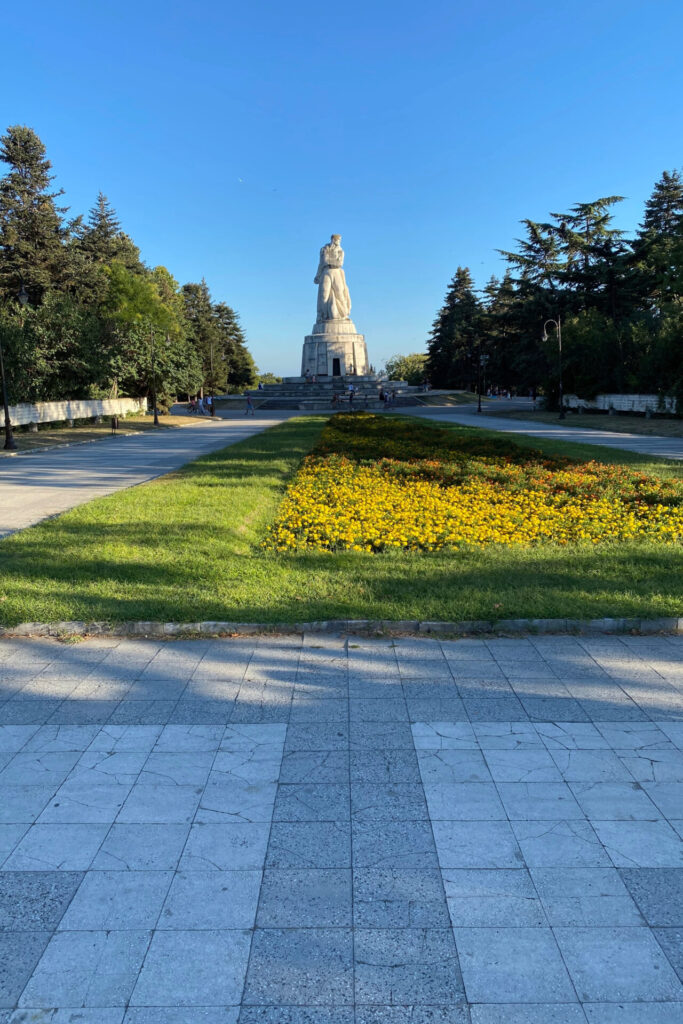
The Sea Garden is among Varna’s most popular and stunning areas. Built in 1862, it features thousands of tulips across its three kilometres. You’ll find the garden a short distance from the sea and is the perfect place to spend a chilled day. There’s a planetarium here as well, and the Aquarium & Naval Museum. This is the perfect place for maritime history lovers who want to see the Drazki torpedo boat.
One of the main landmarks within the park is the Pantheon. This was built in the Socialist Classicism style during the ‘50s in homage to those who fought back against fascism. As you get close to the monument, you’ll be able to see the carvings of the workers and soldiers. After, head along the Alley of the Bulgarian Renaissance. Stone busts of famous faces, such as Botev and Levski, line the long path.

Head to the Beach
As a strong seaside destination, Varna is home to some amazing beaches, where you can relax in the sun or get involved in water sports. Close to the Sea Garden park, you’ll find Varna Central Beach. It’s 500 metres long with calm waters and plenty of sun beds to rent for the day. Nearby, you’ll find beach bars like Makalali Beach as well as an upscale restaurant, The Sea Terrace. Bear in mind that it can get very busy here during the summer.
South Beach is Varna’s widest beach. Visitors praise the beach for its waterslide and volleyball courts, making it the perfect place for adventurous individuals and families. You can hire high-speed jet skis here for around €92. You can also head off on a pirate cruise or yacht party from the nearby Sea Port.
If you don’t mind venturing slightly further out, Golden Sands beach is more than 3 km long and has consistently been awarded the Blue Flag. The accreditation is due to the beach’s cleanliness and safety standards. Walk along the promenade and its stalls before heading for a drink at one of the many bars. Our recommendations are Mojito Beach Style and Skyfall Infinity Pool Bar & Food.
Visit the Roman Baths
The Roman Baths in Varna date all the way back to the late 2nd Century. You’ll find the ruins on the corner of streets San Stefano and Khan Krum. They are one of the largest Roman baths throughout Europe and once acted as the primary hub of ancient Odessos (Varna).
As you walk around the ruins, you’ll see the hypocaust. This is a collection of small brick pillars that supported a double floor, which allowed hot air to move below. This is similar to underfloor heating, which many of us now have in our homes. You can also follow the route the citizens used to take. Go from the cold water of the Frigidarium to the warm water of the Tepidarium, and the hot water of the Caldarium. A few hundred metres away, there’s also the Small Roman Thermae. They built these later on to replace the main baths, which cost too much to maintain.
The Roman Baths are open from 10:00 a.m. to 6:00 p.m. daily from June to September, and 10:00 a.m. to 5:00 p.m. from October to May. It closes on Sundays and Mondays. Prices are €4 for adults and €2 for students and seniors. You can also take a guided tour for around €15.
Explore the Cathedral
The Dormition of the Mother of God Cathedral in Varna is the largest church in the city. It is one of the first things you see when making your way around. The church features a mix of Russian Orthodox and Byzantine architecture with impressive stone walls and copper-domed towers. These now feature a stunning gold and silver finish.
While the outside is spectacular, the inside is where you’ll be most amazed. Check out the murals, which were painted after 1949, and the stained-glass windows depicting Saints Cyril and Methodius. You’ll also be able to see the iconostasis, which is a wall of intricate woodcarvings that took years to complete.
Opening hours for the cathedral are 7:00 a.m. to 5:30 p.m. daily, and entry inside is free. Although, you might have to pay a small fee to take photos. Time your visit at 9:00 a.m. on a Sunday to experience the Sunday morning service. This hosts one of the best choirs in Bulgaria. Bear in mind that it is a holy site, so make sure to cover your shoulders and knees before entering.
Discover the Varna Archaeological Museum
One of the largest museums in Bulgaria, the Archaeological Museum in Varna features exhibits from the Palaeolithic Age to the Middle Ages. It also has some of the biggest collections of ancient terracotta and glass vessels. The must-see here is the treasure from the Necropolis, containing gold from 4600-4200 BC.
As you stroll round the museum, you’ll come across a reconstruction of Grave No. 43. The site once yielded more gold than any other location in the world from that era. Beyond this, you can explore the carved Roman stone coffins and a collection of Orthodox icons.
The museum is open from 10:00 a.m. to 5:00 p.m. daily throughout the year, apart from October through to April. During this time, the museum closes on Mondays and Sundays. Purchase your tickets from the ticket office. The cost is €10 for adults, €4 for school children, and €5 for students. Children under 7 enter for free. There are discounts for groups of 15 or more, too.