
- What is Prague Like in the Summer?
- How to Get to Prague from the UK
- How to Get Around Prague in the Summer
- What Landmarks and Attractions to Visit in Prague
- Charles Bridge (Karlův most)
- Prague Castle (Pražský hrad)
- Old Town Square (Staroměstské náměstí)
- Jan Palach Square (Náměstí Jana Palacha)
- Dancing House (Tančící dům)
- Jubilee Synagogue
- Malá Strana (Lesser Town)
- Wenceslas Square (Václavské náměstí)
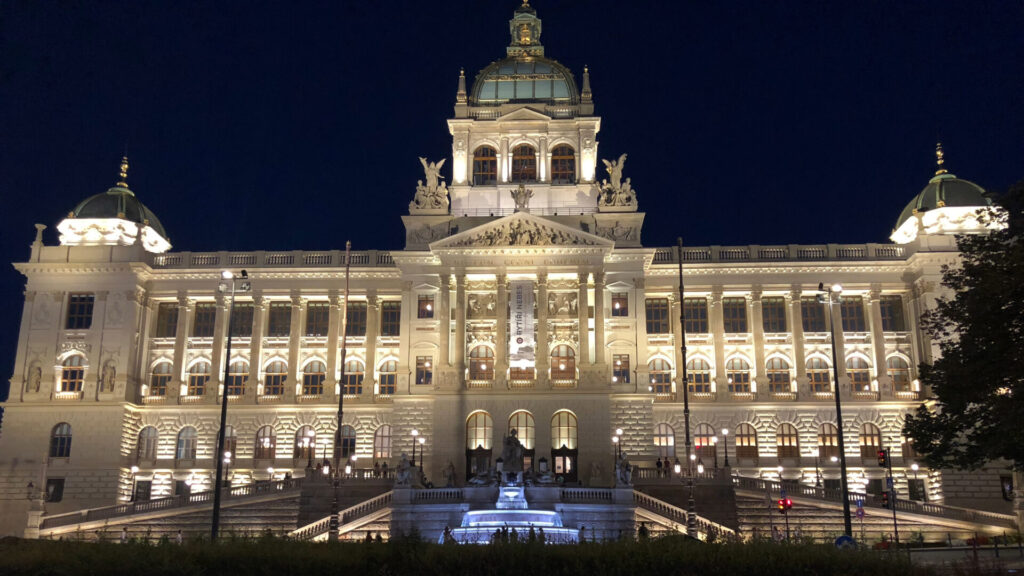
- Church of St. Wenceslas (Kostel svatého Václava)
- National Theatre (Národní divadlo)
- Where to Eat in Prague in the Summer
- FAQs
- Essential Prague Summer Travel Tips
Having visited Prague in both the summer and the winter, we can say the warmer months are easily our favourite time to experience to Czech capital. Yes, temperatures can reach the mid-thirties (°C), which can be difficult without a beach nearby, but it makes all the tourist hotspots appear beautiful in the sunlight. Plus, you’re less limited by what’s open and can enjoy your meals outside, misted by the restaurant fans to keep cool.
If you’re planning a trip to the city in the upcoming months, we list everything we think you need to include in your itinerary. A few days here is plenty, and it’s so easy to pack a lot into this short time.
What is Prague Like in the Summer?
Prague is gorgeous in the summer. On our visit, there was always something going on in the background, whether this was saxophone players on the Charles Bridge or performers in the Old Town Square. While we visited in July during the peak summer period, it never felt overly crowded or unsafe.
The temperature ranged from 30- 33°C, which was difficult at times. You just need to make sure you take things at a reasonable pace and utilise public transport when needed. We visited most of the attractions early in the morning before 10:00 am or later on in the afternoon at 3:00 pm, which made a huge difference.
Most of the restaurants and bars here offer shaded outdoor terraces with fans and misting systems. These were perfect to combat the summer heat and made things all the more bearable.
How to Get to Prague from the UK
Finding flights from the UK to Prague during the peak summer season is quite easy. We flew from Manchester via easyJet, with the flight time taking approximately two hours. The flight to Václav Havel Airport Prague (PRG) was direct, and we had no issues.
Other Northern airports that offer direct flights to Prague include Edinburgh (EDI), which is also operated by easyJet, as well as Leeds Bradford (LBA), with the main operator being Jet2. London typically offers the most variety and highest frequency flights. Operators include British Airways, easyJet, Wizz Air, and Ryanair, which run from London Heathrow (LHR), London Gatwick (LGW), London Luton (LTN), and London Stansted (STN). Flight times also tend to be around the two-hour mark from the South.
Summary of Summer Costs & Timings
| Region/Hub | Airlines | Average Flight Time | Average July Flight Return Cost |
| London (LHR, LGW, STN, LTN) | British Airways, easyJet, Wizz Air, Ryanair | 1h 55m – 2h 05m | £45 – £150+ |
| Midlands & Southwest (BHX, BRS) | Ryanair, easyJet | 2h 00m – 2h 15m | £43 – £110 |
| The North (MAN, LBA) | Ryanair, easyJet | 2h 05m – 2h 15m | £55 – £160 |
| Scotland & NI (EDI, BFS) | easyJet, Ryanair | 2h 15m – 2h 30m | £70 – £130 |
Note: Some of these prices only include a small personal piece of luggage that fits under your seat. You may need to cover an additional cost for checked luggage during the peak season.
How to Get Around Prague in the Summer
Prague is a very compact city, which means walking is one of the best ways to get around. We were able to visit the Old Town Square, the Charles Bridge, and Malá Strana all on foot within the same day. However, since the cobblestones and the heat can sometimes make this a chore (and you want to pack as much in as possible), you may wish to use the efficient public transport system.
Prague Integrated Transport (PID) is probably one of the best (and cheapest) networks we’ve seen in Europe. While we always opted for physical tickets, you can use the official PID Lítačka mobile app that gives you time-based tickets to use across the trams, buses, and metro. It’s also usually cheaper, which we wish we had known before, costing around 36 CZK (~£1.20) for a 30-minute ticket, 46 CZK (~£1.55) for a 90-minute ticket, and 140 CZK (~£4.70) for a 24-hour pass.
Important Note: You must activate your ticket before boarding, as inspectors will typically target the tourist routes. If you fail to do this, you may be fined 1,200 CZK (~£42) on the spot.
The Metro
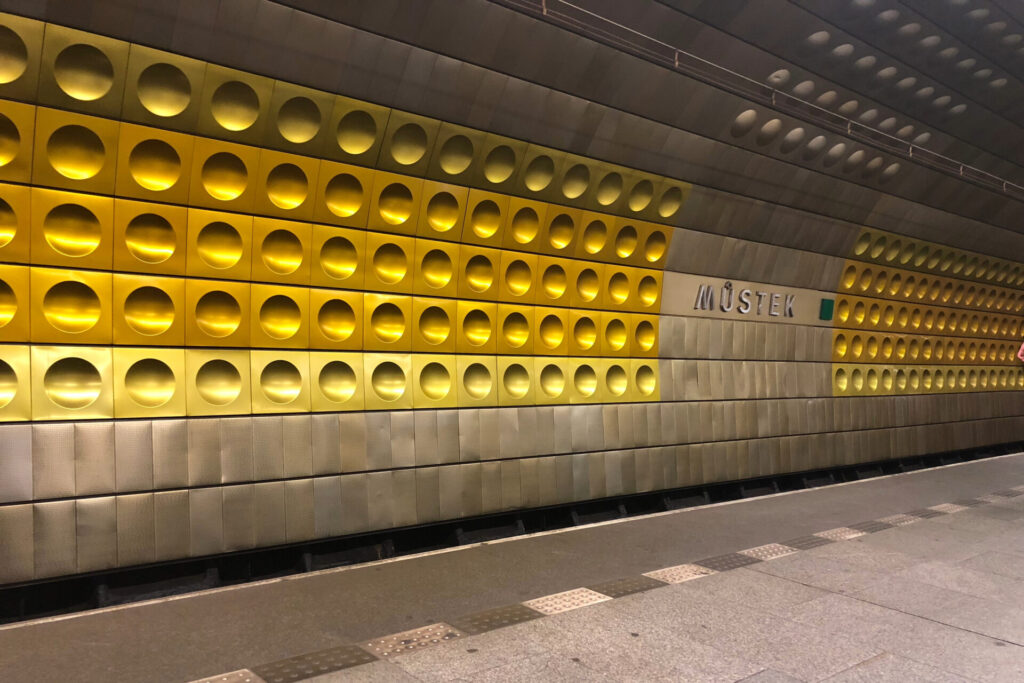
If you’ve ever navigated the London Metro system, this will be a breeze. The underground metro in Prague is a welcome retreat from the summer heat. The three lines (A-Green, B-Yellow, C-Red) operate from 5:00 am until midnight. Typically, you’ll only have to wait a couple of minutes between each train during the peak daytime hours.
Most Popular Metro Routes for Prague
Line A (Green Line) – Best for Sightseeing
- Staroměstská Station: This puts you a 2-minute walk from Old Town Square to see the Astronomical Clock, the Jewish Quarter (Josefov), and the eastern entrance of the Charles Bridge.
- Malostranská Station: Located across the river in Lesser Town. This is the place to see the Lennon Wall, Kampa Island, and the Old Castle Stairs leading up to Prague Castle.
- Můstek / Muzeum Stations: These stations sit at the bottom and top of Wenceslas Square, transporting you in front of the National Museum and the Prague State Opera.
Line B (Yellow Line) – Best for Shopping and Culture
- Náměstí Republiky Station: You exit here onto the square with the Art Nouveau Municipal House and the Gothic Powder Tower.
- Karlovo Náměstí Station: The closest stop to Frank Gehry’s Dancing House (a short 5-minute walk to the riverbank).
Line C (Red Line) – Best to See the Fortress
- Vyšehrad Station: Drops you at the edge of Vyšehrad Fortress. The train travels inside a concrete tube suspended beneath the massive Nusle Bridge before this station, which is an amazing sight to see.
Trams
These are the best option if you want a journey with a view. The trams generally run from 4:30 am until midnight with around a 10-minute wait. We took Tram 22 since it goes past the National Theatre and across the river up to Prague Castle. Trust us, it’s way easier than trekking all the way there in the baking heat.
If you find yourself in the city after midnight, there are a few trams that run every 30 minutes or so. These tend to be the 91-99 trams, and are a godsend if you want to stay out to enjoy the nightlife scene without worrying how you’ll get back to your hotel.
Most Popular Tram Routes for Prague
- Tram 22: The best route for sightseeing. It travels from the Vinohrady district to the National Theatre, Praha Hrad (Prague Castle), the Belvedere Summer Palace, and the Strahov Monastery.
- Tram 17: The tram runs along the Vltava River for almost all of the journey. You’ll pass by the Dancing House at Jiráskovo náměstí, the National Theatre, and the Karlovy Lázně stop (the best tram drop-off for the Charles Bridge). It also goes to Letná Park and the Trade Fair Palace modern art gallery.
- Tram 42: A hop-on-hop-off line operated by vintage wooden tram cars. It runs a loop through the centre, including Wenceslas Square, the Powder Tower, Republic Square, the Jewish Quarter, and Prague Castle. You’ll need to buy a separate ticket for 350 CZK (~£11.80) to ride this.
Buses
The buses in Prague also run on a similar 5:00 am to midnight schedule. To get from Prague Airport to your accommodation, your best bet is Trolleybus 59 (previously Bus 119), which runs from Václav Havel Airport to the Nádraží Veleslavín metro station (Line A) in just 15 minutes. If you buy a 90-minute ticket, you should be fully covered here. The Airport Express (AE) shuttle bus is still reasonably affordable but will set you back 200 CZK (~£6.70) to get to Praha Hlavní Nádraží train station.
Most Popular Bus Routes in Prague
- Bus 112: Runs from the Nádraží Holešovice metro station (Line C) directly to Troja. From there, you can get to Prague Zoo and the Prague Botanical Garden.
- Trolleybus 59: This connects Václav Havel Airport (PRG) directly to the Nádraží Veleslavín metro station (Line A). It’s the best way to get into the city via the terminal to the metro line.
Taxis
Try to avoid hailing any street taxis in Prague, as these are similar to the UK. You’ll be charged a premium. Instead, you can use apps such as Uber and Bolt, which often run all day every day. We found a 15-minute journey to cost around £5 to £8. Although, like with any region, prices surge during busy periods or weekend nightlife hours.
What Landmarks and Attractions to Visit in Prague
We were most excited to discover Prague’s history and famous landmarks, which there are many. It almost feels like there’s something around every corner, and it doesn’t take you long to make your way to each attraction. Our selection includes the top sights to see in Prague that you can easily fit into a three-day trip. What’s even better is that most of them you can admire free of charge from the outside, meaning you only need to budget for tickets if you want to explore specific interiors or museum exhibits.
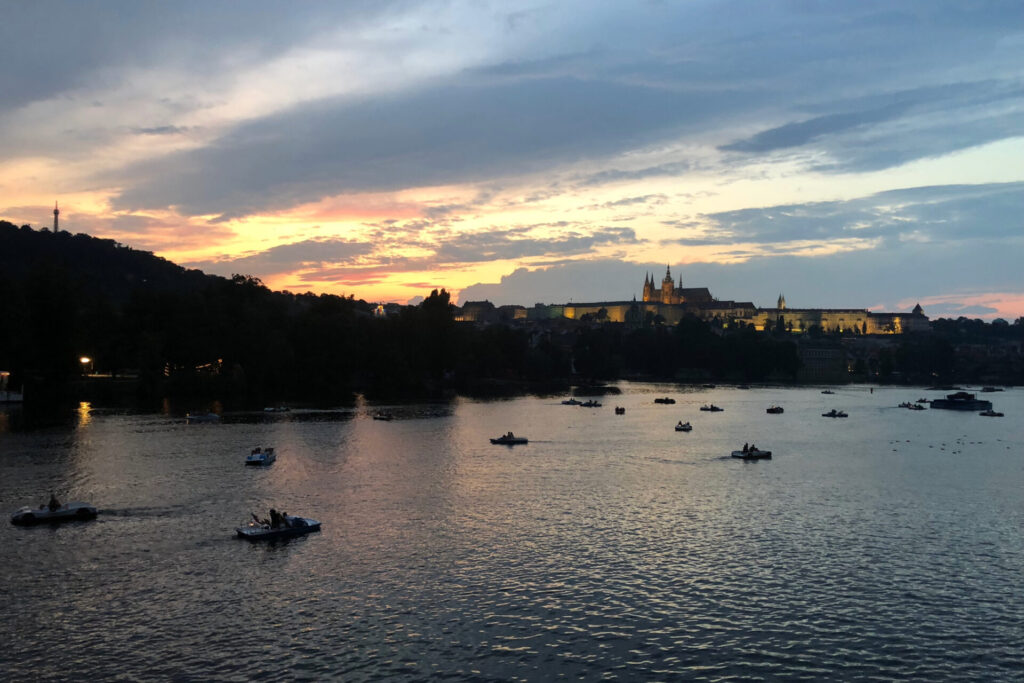
Charles Bridge (Karlův most)
Connecting Prague’s Old Town with the Lesser Town along the Vltava River is the Charles Bridge. The bridge was originally commissioned by King Charles IV to replace the Judith Bridge in the 12th century, which was damaged after a flood in 1342.
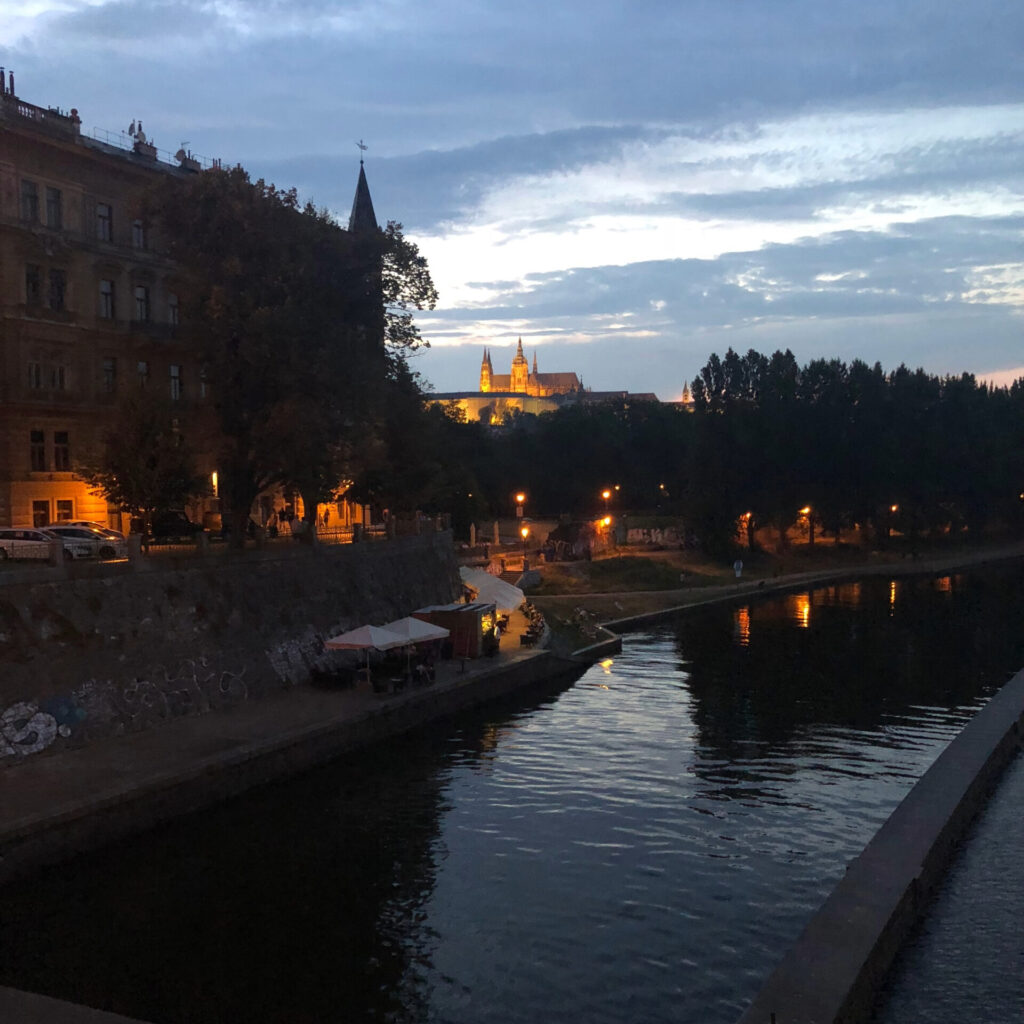
It took more than 45 years to complete, finally opening in 1402. The sandstone blocks, arches, and grand towers ensure the bridge remains one of the most picturesque across the world. Since it sees more than 30,000 visitors a day, we recommend taking your stroll before 8:30 am or after 9:00 pm (we did both). This way, you get the clearest pictures and don’t get bumped into, which isn’t fun in the searing heat.
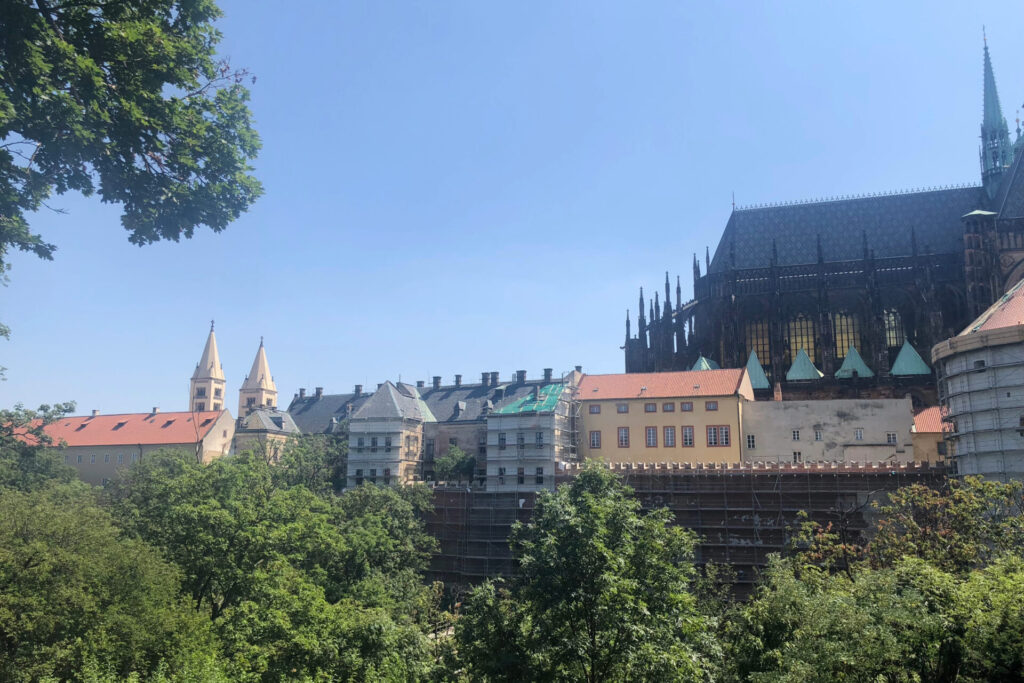
Prague Castle (Pražský hrad)
A trip to Prague Castle is a must when visiting the city. It is the world’s largest ancient castle complex, with the grounds and courtyards open to the public for free from 6:00 am to 10:00 pm. If you want to head inside, though, you’ll need to buy a Prague Castle Main Circuit ticket, which costs 450 CZK (~£15.20).
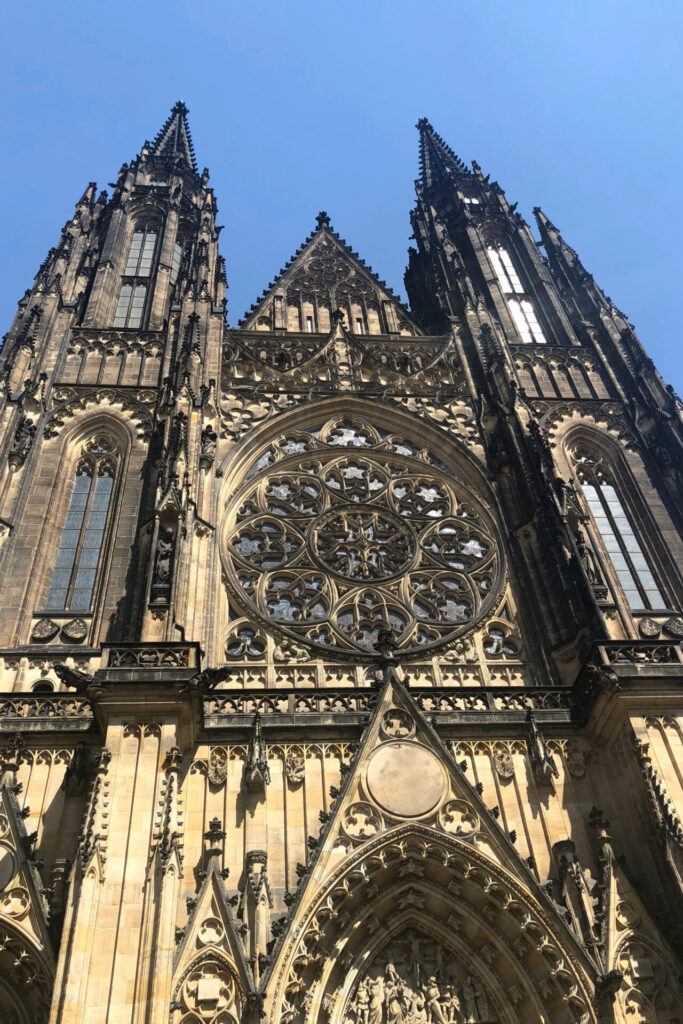
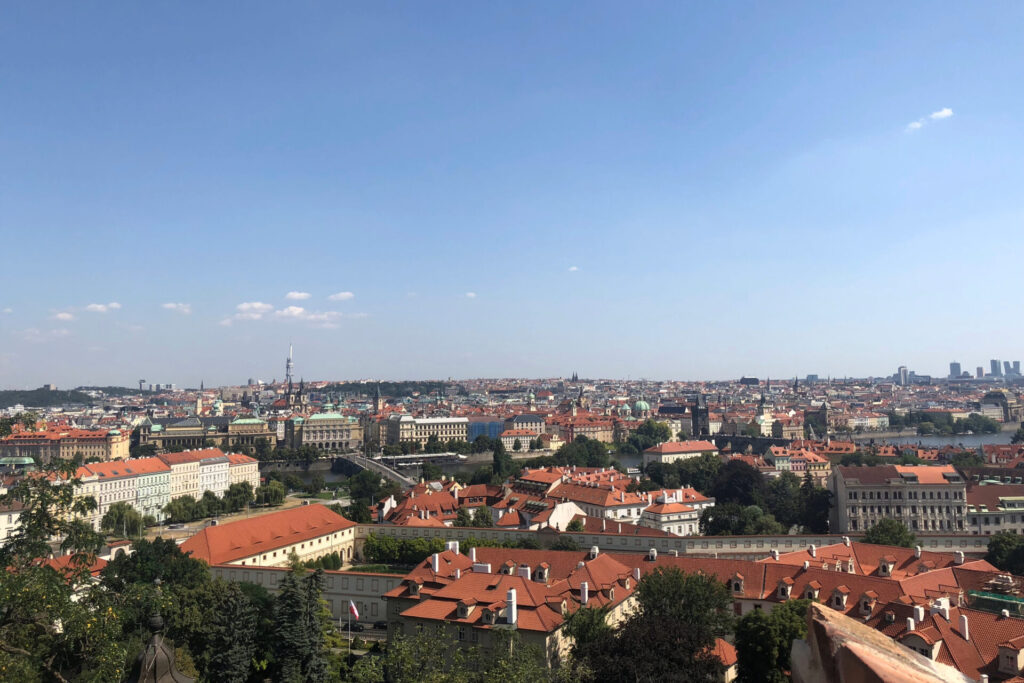
Your ticket grants you access to the Old Royal Palace, the Golden Lane, St. George’s Basilica, and St. Vitus Cathedral. These buildings usually open from 9:00 am to 5:00 pm daily during the summer months. We suggest buying the tickets online beforehand as the queues can be long. Additionally, aim to arrive before 10:00 am or after 4:00 pm to beat the crowds and experience uninterrupted panoramic views of Prague. We particularly loved the terracotta roofs of Malá Strana.
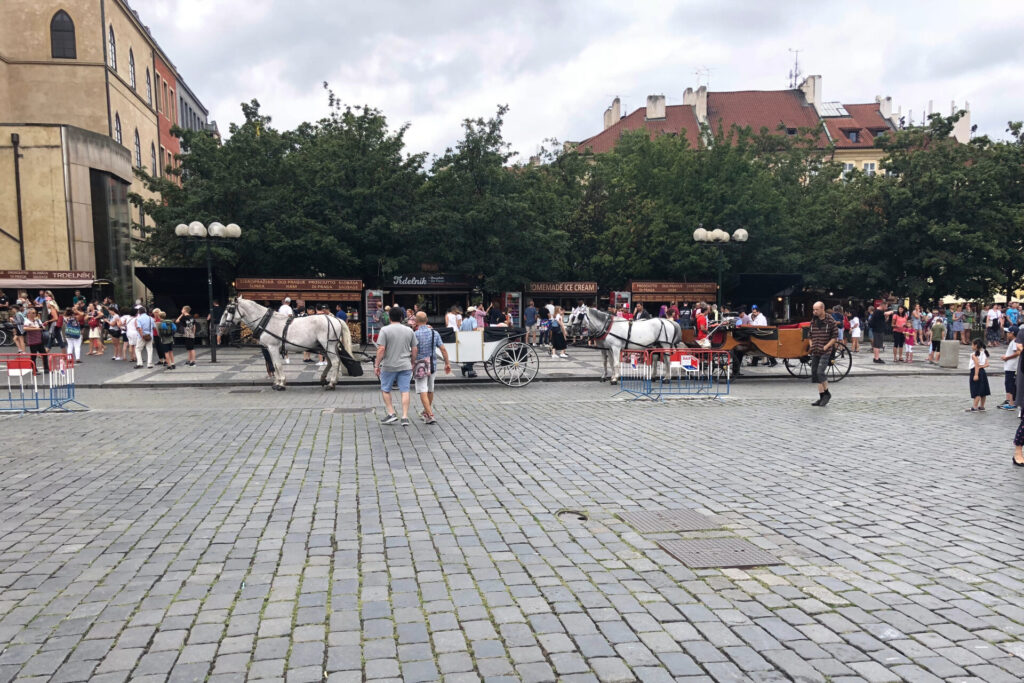
Old Town Square (Staroměstské náměstí)
Prague’s Old Town Square has been the epicentre of the city since the 10th century. You can see the history all around you from the different Gothic, Renaissance, and Baroque-style buildings. In the summer, you’ll find plenty of market stalls on the streets selling traditional Czech, Hungarian, and Slovak foods, as well as mascots and performers. You can even head off on a horse-drawn carriage for a tour through the city.
We detail some of our highlights from the Old Town, so you can make the most of your time here.
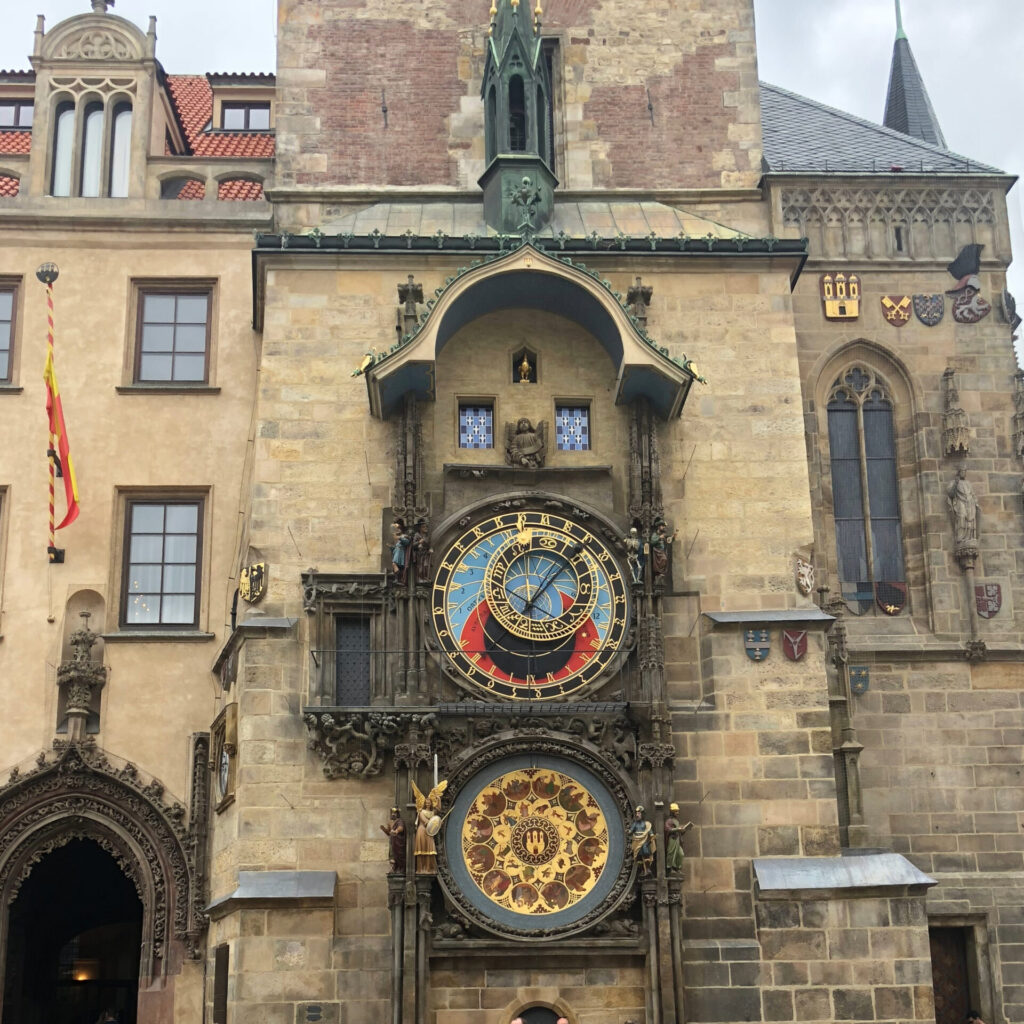
Prague Astronomical Clock (Pražský orloj)
One of Prague’s most iconic attractions is the Astronomical Clock. You’ll find it mounted on the southern wall of the Old Town Hall. The clock was first installed back in 1410, making it the third-oldest one of its kind in the world that is still fully operational.
The top dial represents the position of the sun and moon in the sky, including other details like a zodiac ring. The bottom dial, which was added later, features medallions that represent the calendar months and 12 signs of the zodiac.
Time your visit right on the hour to see the small blue shutters swing open at the top of the clock. You’ll get to see some small, animated figurines of the Twelve Apostles move across the windows. Finally, a golden rooster appears at the very end of the show.
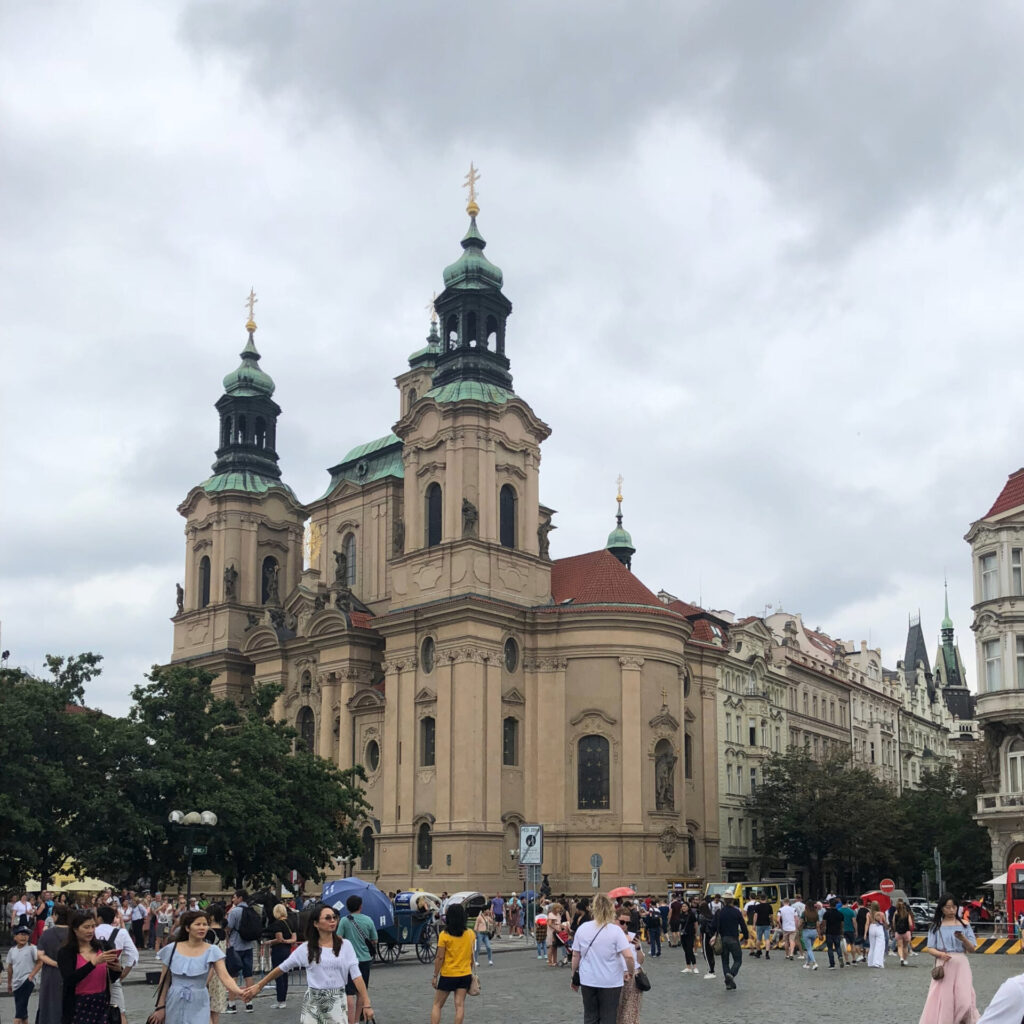
Church of St. Nicholas (Kostel svatého Mikuláše)
The Church of St. Nicholas was built between 1732 and 1737 by Kilian Ignaz Dientzenhofer. It is one of the finest examples of High Baroque architecture in Prague. Specifically, you’ll notice its green copper roofs and twin towers from the northwest corner of the square. While it’s served many uses, it is now used as the main church of the Czechoslovak Hussite Church and hosts classical music concerts.
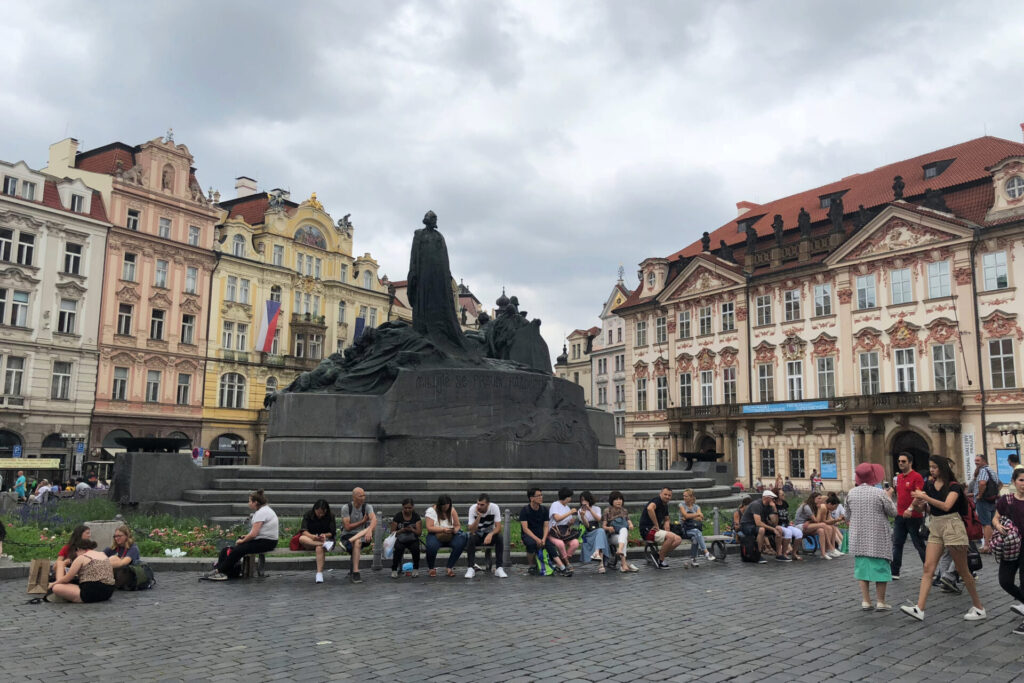
Jan Hus Memorial (Pomník Jana Husa)
The Jan Hus Memorial is dedicated to a 15th-century Czech religious reformer who laid the groundwork for the Protestant Reformation. Because of this, he was burnt at the stake in 1415. His statue, unveiled in 1915, serves as a symbol of Czech identity, and he remains a national hero in the country. If you go up close to the stone base, you’ll see a famous quote that translates to: “Love each other, wish the truth to everyone.”
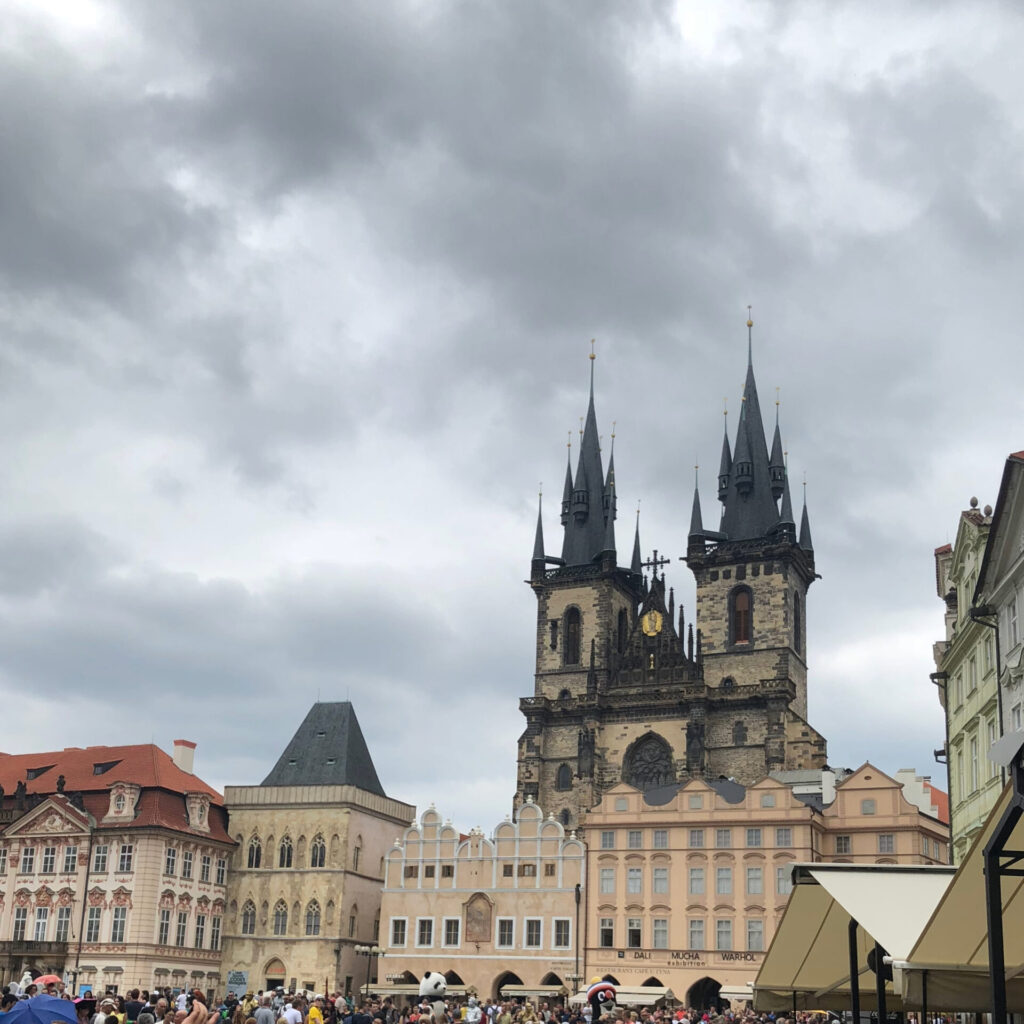
Church of Our Lady before Týn (Kostel Matky Boží před Týnem)
Standing in the square, you’ll immediately notice the towers of the Church of Our Lady before Týn in the skyline. Notably, it’s one of the most famous Gothic churches in Prague, built at the start of the 14th century. The towers differ in height, which is intentional. This is to represent Adam (the sun) on the right and Eve (the moon) on the left. However, to get to the entrance, you’ll need to walk behind the arcade of the buildings in front of the Týn School.
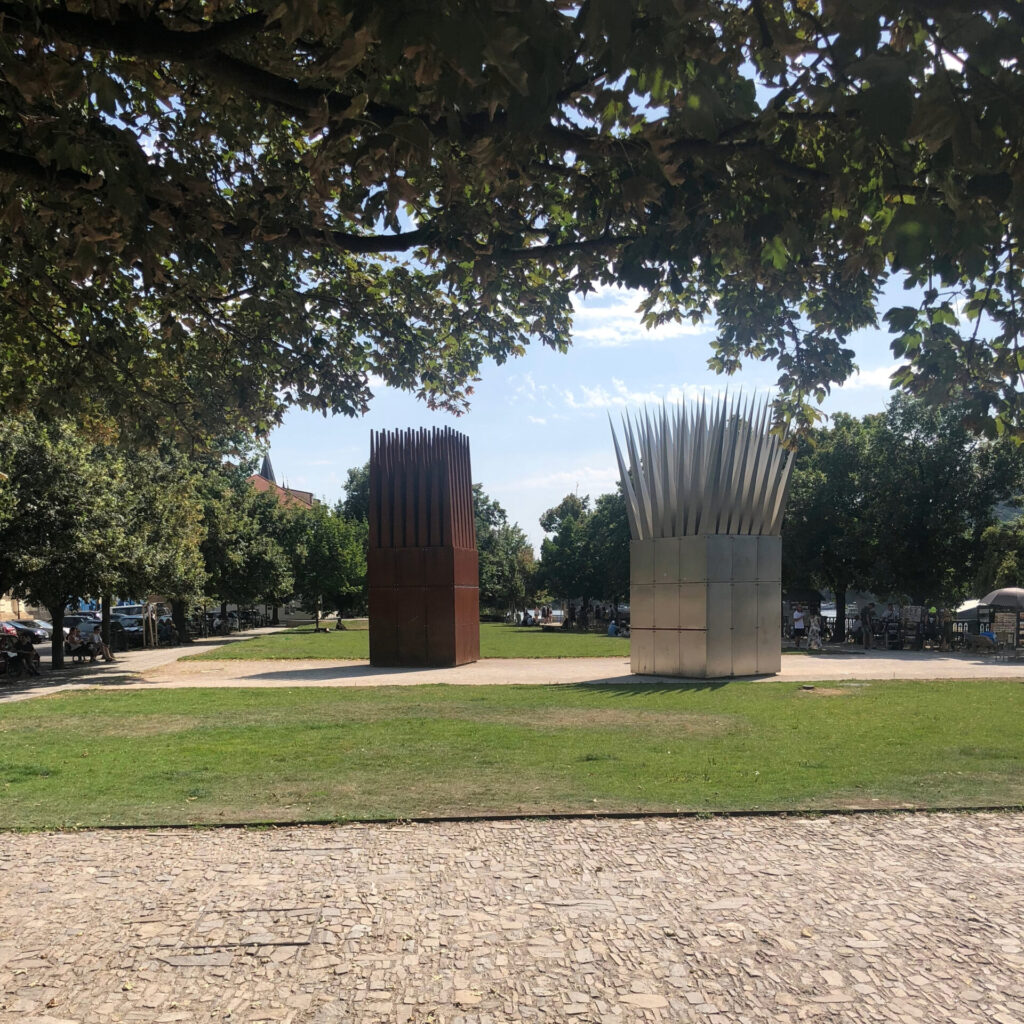
Jan Palach Square (Náměstí Jana Palacha)
Jan Palach Square is one of the top public spaces in Prague on the right bank of the Vltava River in the Old Town. Its current name honours a student (Jan Palach) who tragically immolated himself in 1969 to protest the Soviet occupation of Czechoslovakia.
In addition to the Rudolfinum concert hall, the area features sculptures such as Antonín Dvořák, Josef Mánes, and The Hejduk Memorial. The latter includes The House of the Suicide and The House of the Mother of the Suicide. The unusual sculptures represent Palach’s unyielding stance and the grief of his mourning mother.
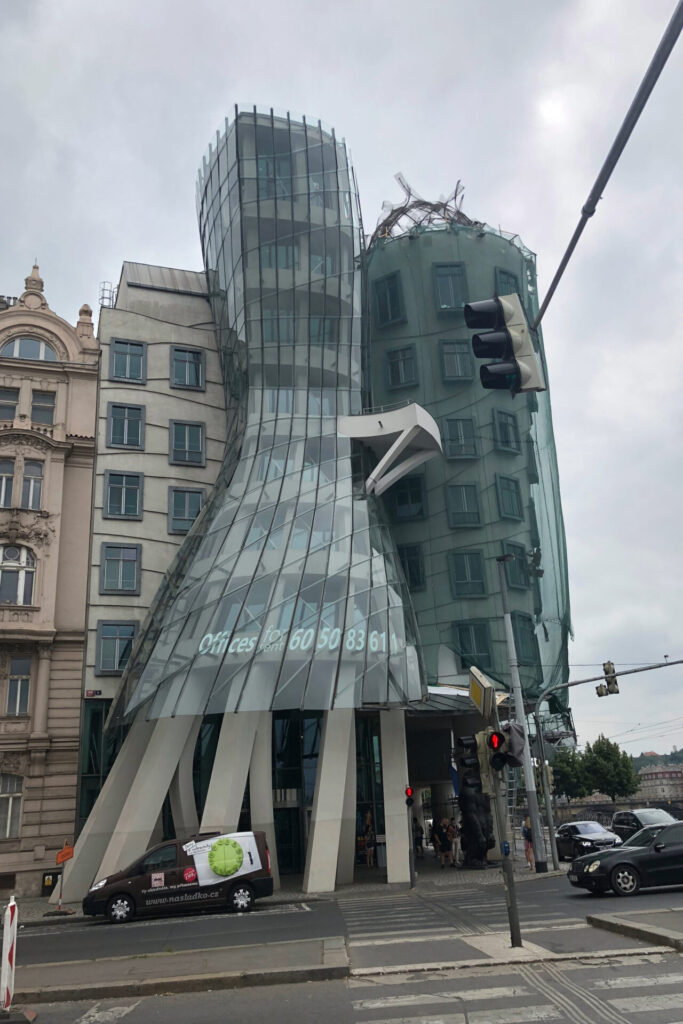
Dancing House (Tančící dům)
If you have time, we’d highly recommend walking to the Dancing House. You’ll find the landmark on the corner of the Jirásek Bridge (Jiráskův most) and the Rašín Embankment (Rašínovo nábřeží) along the Vltava River. It’s an impressive building designed by Vlado Milunić in 1996 and represents a pair of dancers. Some even call it Fred and Ginger after the famous duo.
When it was first revealed, locals found it controversial due to the building’s contrasting appearance to the traditional Baroque and Gothic architecture in the city. Now, it’s used as an office space, a gallery, a hotel, and a restaurant. While our picture includes construction work, the major repairs have since finished. This means you’ll now be able to get the perfect view of the Dancing House, which is currently in the middle of celebrating its 30th anniversary. The exhibition inside opened in April and will run all the way through October 2026.
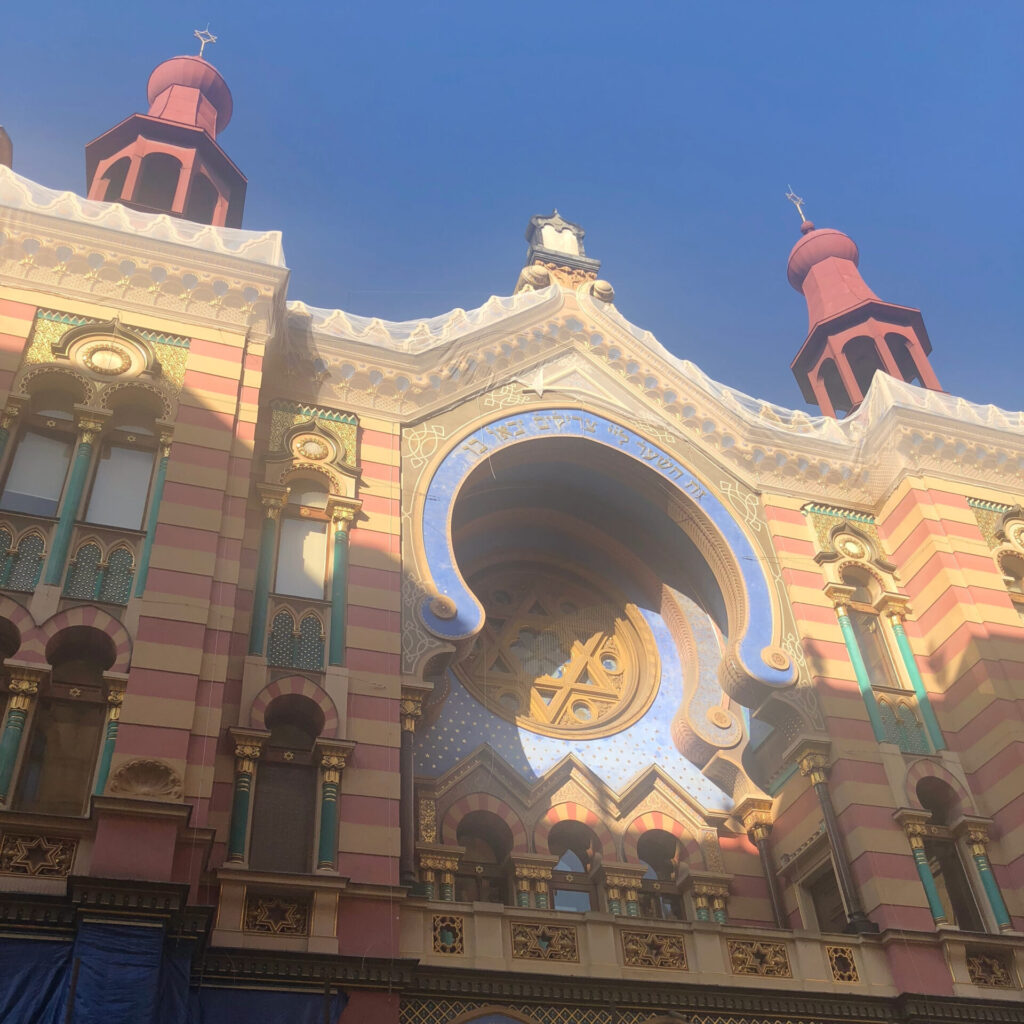
Jubilee Synagogue
Also called the Jerusalem Synagogue due to its location on Jeruzalémská street, the Jubilee Synagogue is one of the most vibrant buildings in the city. It features Art Nouveau decoration and Moorish Revival architecture. You can see a mix of red and white on the outside, with a blue arch and gold detailing.
To this day, it’s still a house of worship, but it is also open to the public. The inside is just as beautiful and includes Viennese Art Nouveau murals and stained-glass windows. Opening times are from 10:00 am to 5:00 pm, with entry costing 200 CZK (~£6.70). It is not included in the Jewish Museum in Prague combined ticket, but it is included in the Prague Visitor Pass. The synagogue closes on Saturdays for Shabbat and on major Jewish holidays.
Malá Strana (Lesser Town)
Underneath Prague Castle is Malá Strana, one of the city’s most stunning preserved districts. It’s easily recognisable for its cobblestone roads and Baroque architecture, and is perfect for those who want to explore the quieter side of Prague.
You should allocate a few hours of one of your days here to see all of the religious monuments and symbols of political defiance. Here are a select few of our favourites we recommend adding to your itinerary.
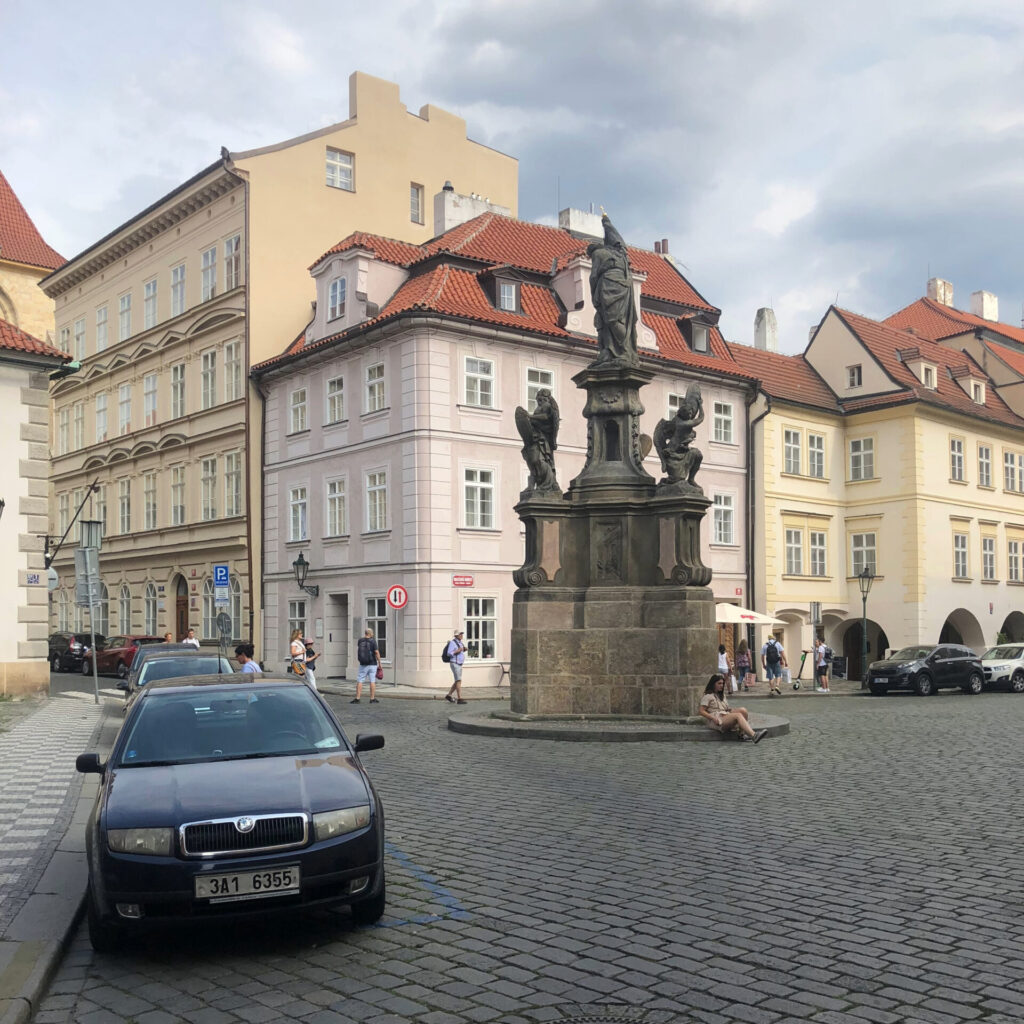
Statue of St. John the Baptist with Angels
Located in the middle of Maltese Square (Maltézské náměstí), you’ll find a sandstone landmark. Built in 1715 by Ferdinand Maxmilián Brokoff, the Statue of St. John the Baptist with Angels serves as a monument of gratitude to God for saving the city from a devastating plague.
On the pedestal is St. John the Baptist, who was the patron saint of the Order of the Knights of Malta. You’ll notice he is surrounded by carved angels and reliefs.
John Lennon Wall (Lennonova zeď)
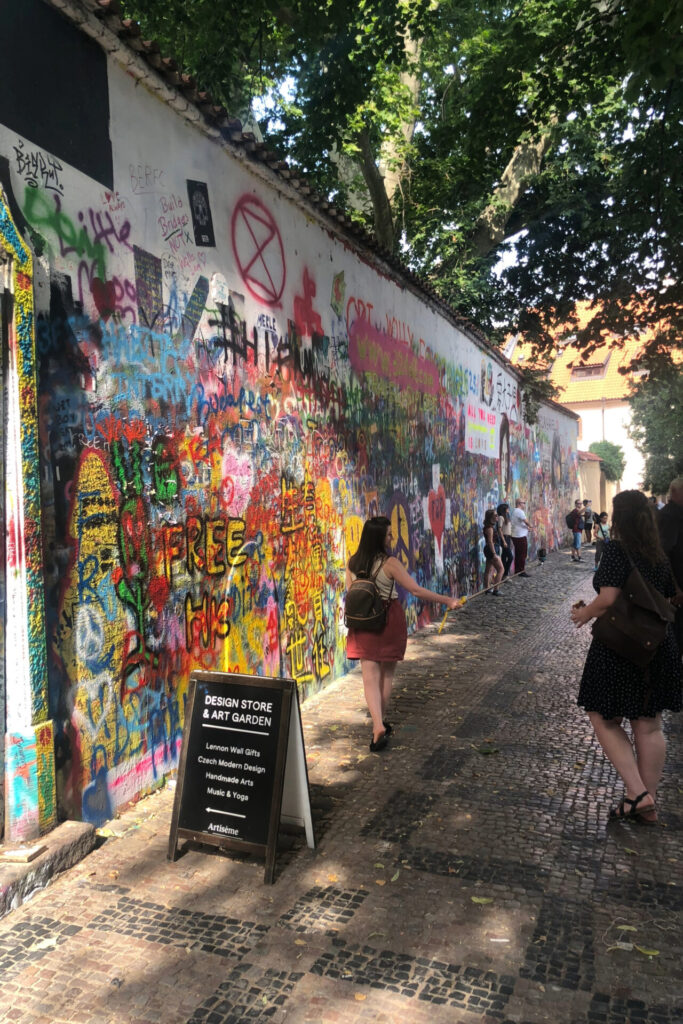
The Lennon Wall can be found in the Malá Strana (Lesser Town) district. It’s a symbol of peaceful resistance, covered in Beatles lyrics and graffiti. During the communist regime in Czechia in the 1980s, young locals would express desires for freedom and political protest on the wall. As a result, the police would often cover it up, only for new messages to appear the following day.
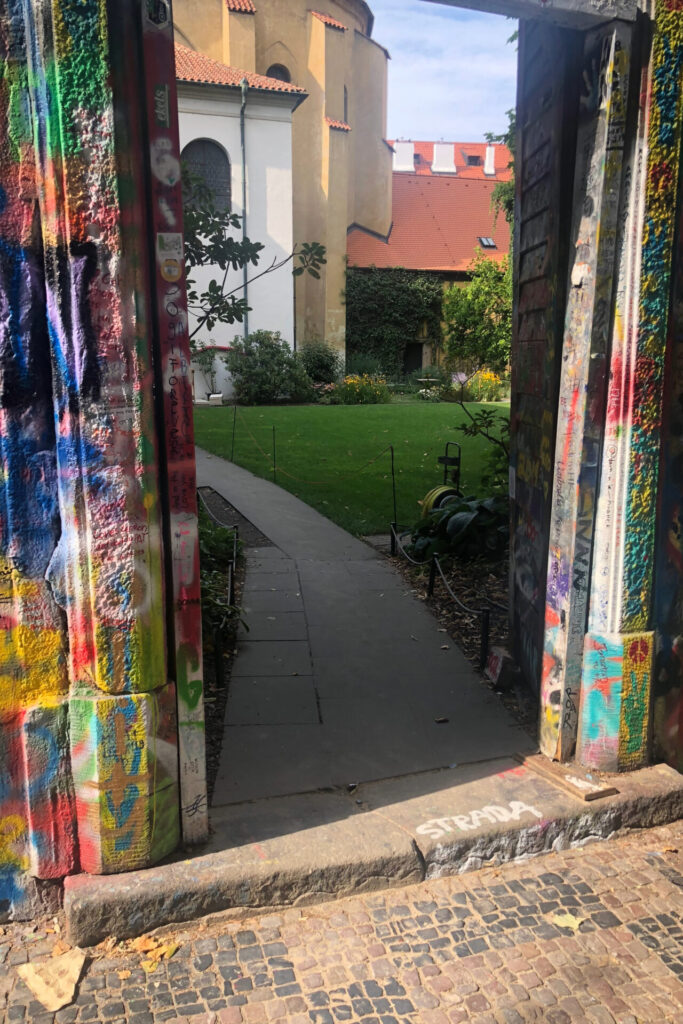
The John Lennon Wall is arguably the most picture-perfect and Instagrammable location in Prague. And it looks different each time you visit due to new street art and spray paint from local artists. Behind the wall is a popular design boutique and art garden called Artisème.
Wenceslas Square (Václavské náměstí)
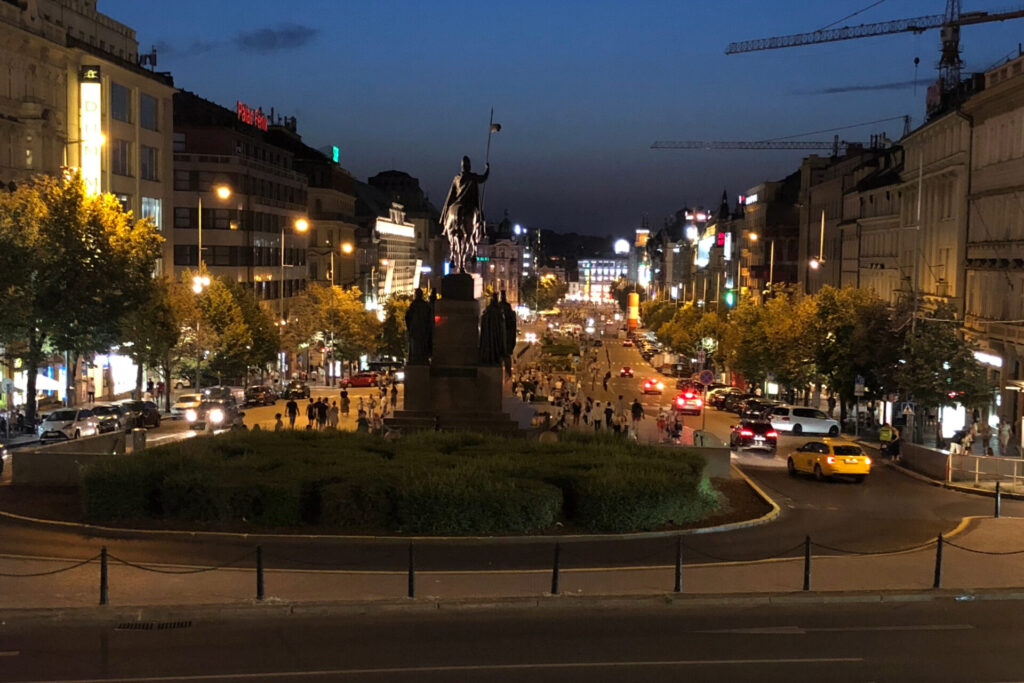
Located in the New Town, Wenceslas Square is one of Prague’s main city squares. It’s essentially a huge avenue filled with trees and includes lots of high-end shops and nightlife venues. We found this to be the best area for restaurants in Prague.
The square has been the setting for many significant events over the years. This includes the proclamation of the first Czechoslovak Republic in 1918 and the protests of the 1989 Velvet Revolution that brought down the communist regime.
The St. Wenceslas Monument is the standout of the entire area. The bronze equestrian statue is dedicated to Saint Wenceslas, the patron saint of Bohemia, holding a lance and flanked by smaller statues of other Czech patron saints around the base.
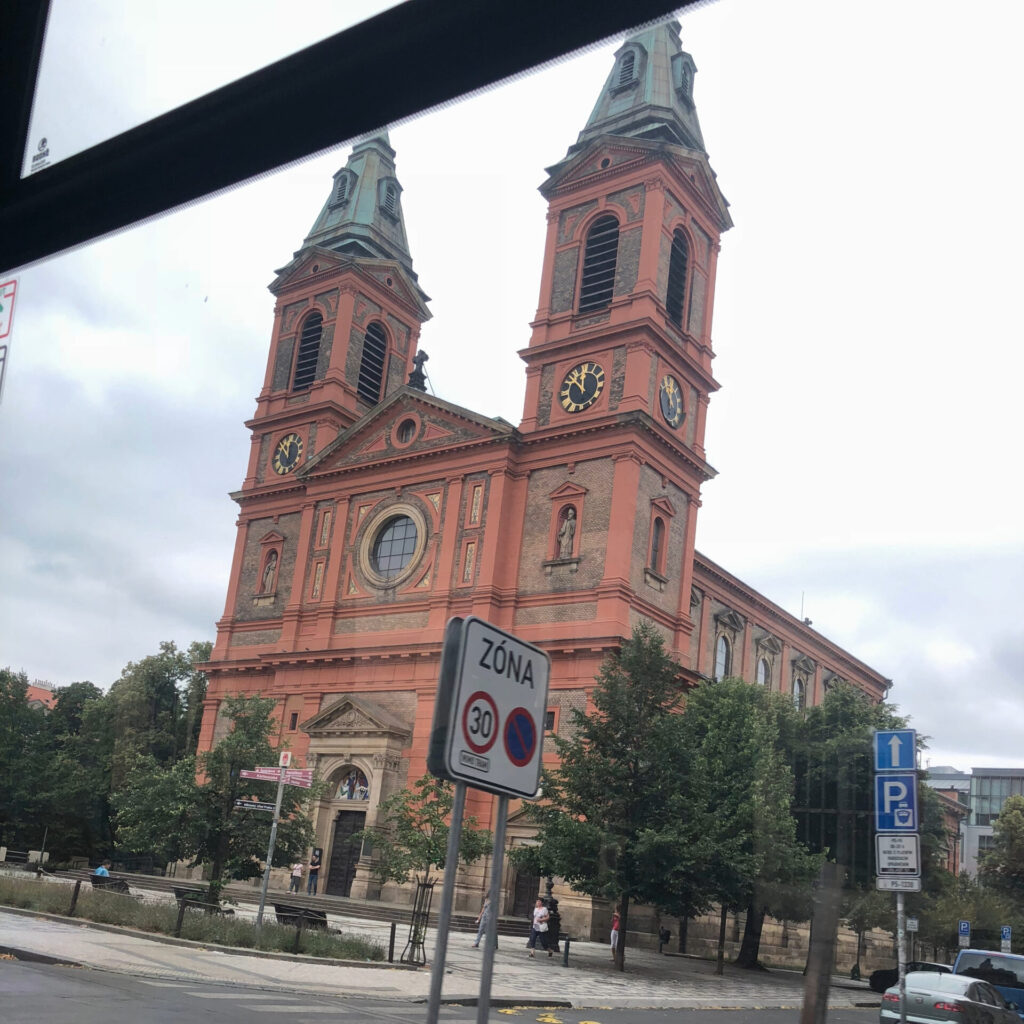
Church of St. Wenceslas (Kostel svatého Václava)
Located in the Smíchov district of Prague, the Church of St. Wenceslas is considered to be one of the most significant Neo-Renaissance monuments in the country. Constructed between 1881 and 1885, the church is dedicated to St. Wenceslas (Svatý Václav), who was the Duke of Bohemia and the principal patron saint of the Czech nation. Visually, the red basilica features two square towers, each with its own clock face.
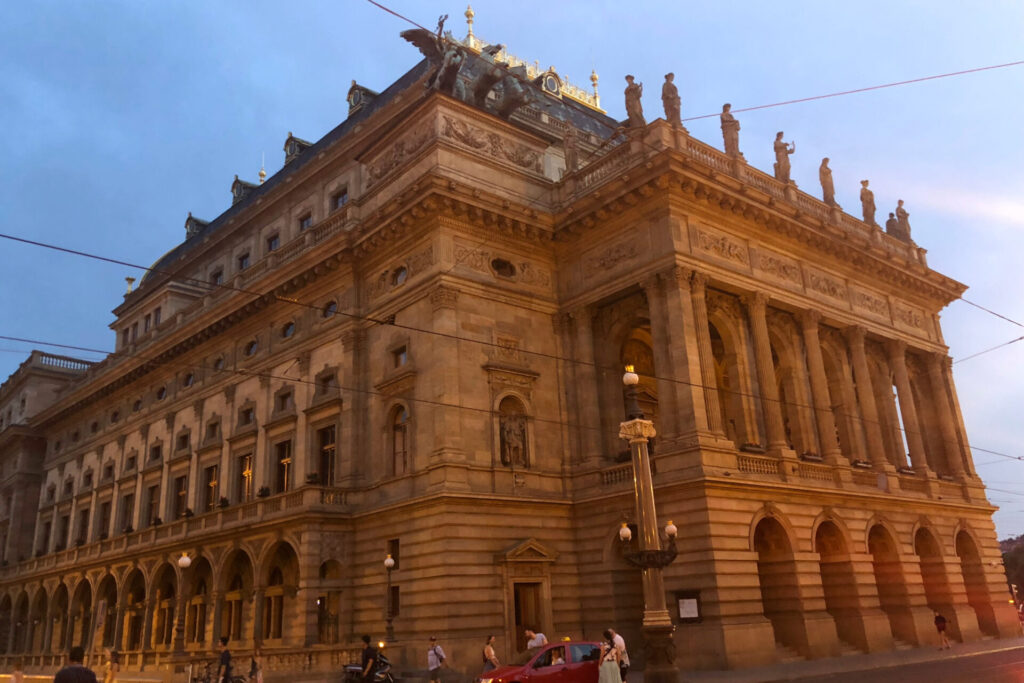
National Theatre (Národní divadlo)
The National Theatre was built entirely through the donations of residents. This was because they wanted a stage dedicated to their own language during the Austro-Hungarian Empire. It’s a beautiful piece of Neo-Renaissance architecture, featuring a bronze triage of horse chariots.
The best way to see the theatre is to attend an opera or ballet performance. With a ticket, you can access the marble staircases and see the Czech paintings in the hallways. However, the star of the show is the painted main stage curtain, which is raised before the shows begin. To see more of the building, you can take a 50-minute guided tour in English through the underground foundation stones and the main auditorium. Just keep in mind that these tours are sometimes halted for maintenance and construction work, particularly during July.
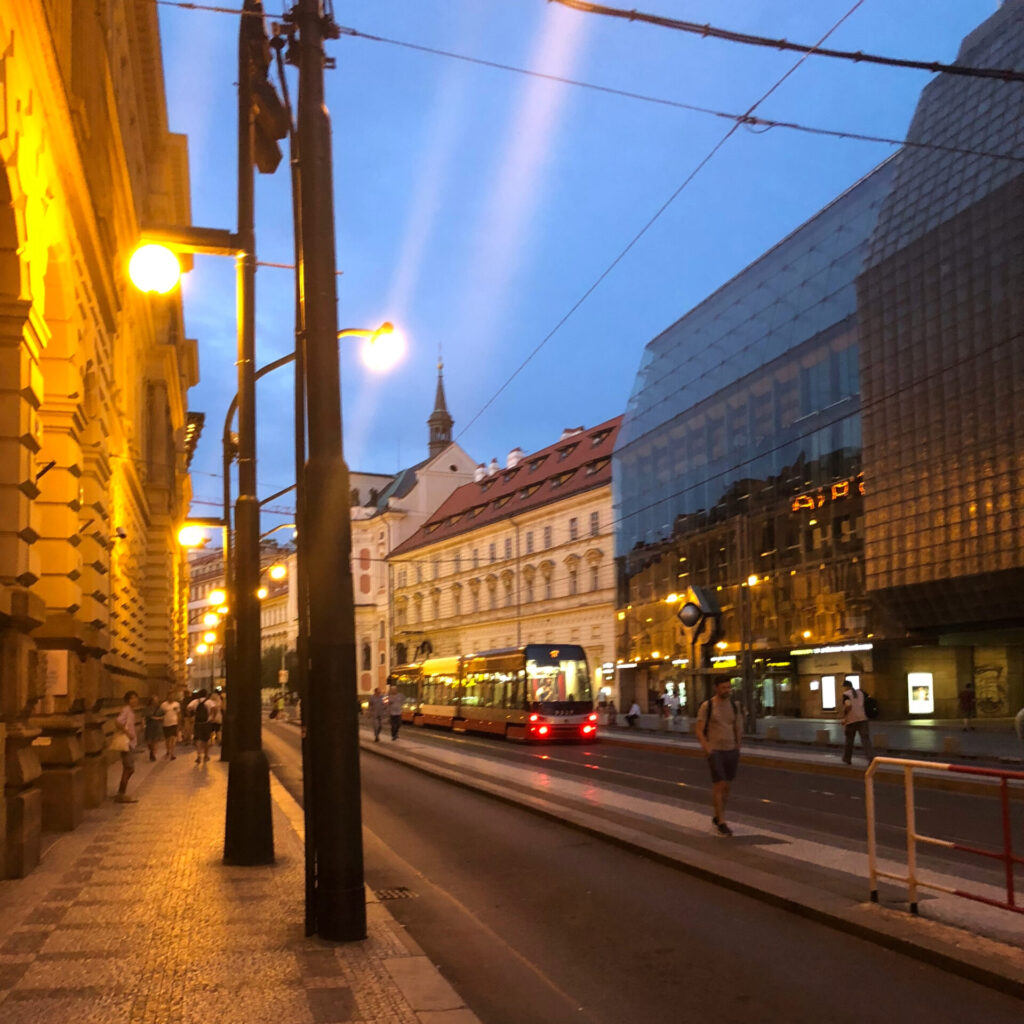
Where to Eat in Prague in the Summer
Prague pleasantly surprised us with its variety of options for food. Not only did we find restaurants serving local specialities, but also a range of cuisines for across the world. If you’re looking to avoid the tourist traps and find somewhere to escape the heat, here are a few of our favourite spots.
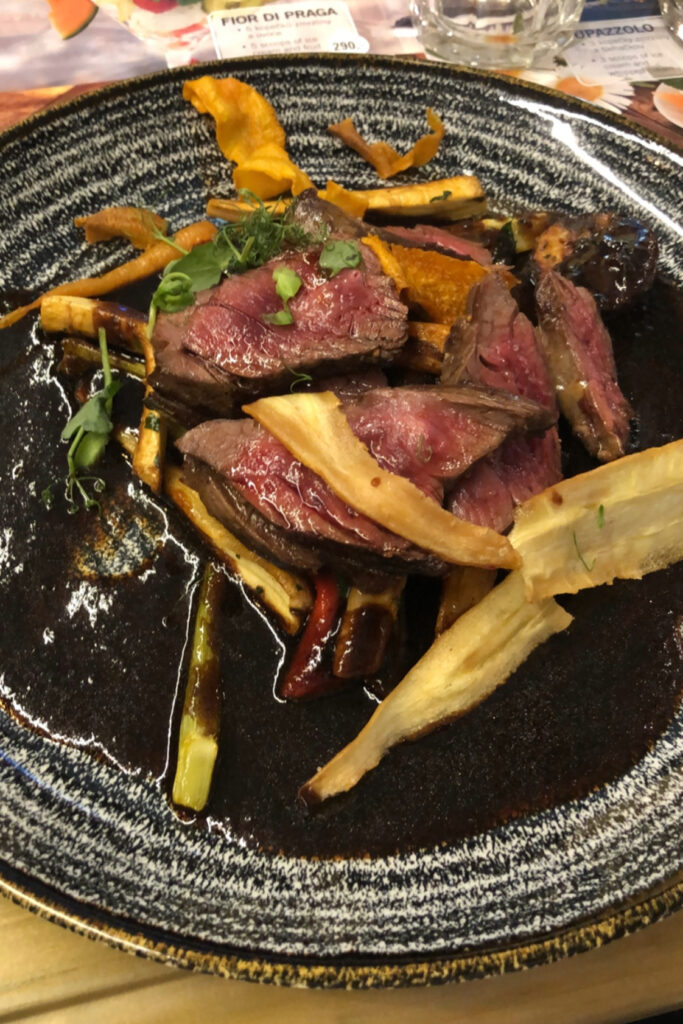
Ristorante Italiano Buschetto
Probably our favourite restaurant that we visited on our trip was Ristorante Italiano Buschetto. You’ll find it on Wenceslas Square with an Italian-style interior and outdoor garden dining area. It’s also fully air-conditioned, so if you’re unable to bag yourself an outside seat, you can still chill indoors.
The Beef Hanger is the top dish here, with the beef cooked perfectly. It comes with crispy vegetables and a dark, rich gravy that us Northerners know and love. They also do a Mushroom Risotto that we tried on our final night (of course we came back), as well as a range of pizzas to please the entire group.
La Degustation Bohême Bourgeoise
If you’re looking for a Michelin-starred eatery that serves traditional Czech cuisine, a reservation at La Degustation Bohême Bourgeoise is non-negotiable. The experience here is what sets it apart from other restaurants in the area. It features a multi-course tasting menu with an open kitchen, where you can watch the team preparing your food.
While the tasting menu changes daily, we were served dishes like lamb with green peas and sweet onion, rabbit schnitzel, and a blueberry and basil sorbet. Before any mains, though, you’re given lots of small starters, along with a wine pairing and bit-sized sweet treats.
Top Tip: If you’re worried about eating abroad with allergies (we also have to be careful), the restaurant is very accommodating. Just make sure to notify the kitchen in advance or pop by during the day to see what’s on the menu.
Vazi
Georgia is high up on our list of places to visit, so when we heard about a restaurant serving Georgian food in Prague, we had to check it out. Vazi is led by Chef Keti, who uses her family recipes to serve up authentic and tasty flavours of the Caucasus.
The inside is super cosy with neutral colours and exposed brickwork. It’s completely unpretentious but still elegant, with subtle nods to Georgian culture, such as the small clay plates used for baking. You’ll also see a huge display of wine bottles. We’d recommend a glass of the Tsinandali or Rkatsiteli.
When it comes to the food, you can’t go wrong with the Shashlik. This features chicken with a sour cream and tomato sauce with Georgian spices. Another must-try is the Adjarian Khachapuri. Similar to pizza, it’s a baked dough boat filled with cheese and an egg.

Gelateria & Caffé Amato
An authentic ice cream is a must in Prague in the summer. Our top spot for some gelato is Gelateria & Caffé Amato, which you’ll find a short walk away from Wenceslas Square on Vodičkova Street. Unlike tourist shops, they use full-fat farm milk sourced from the nearby Krkonoše mountains.
We opted for three scoops, which included Straciatella, Salted Caramel, and Lemon Curd (the latter was a limited-edition flavour). It might sound a little unusual, but they all paired together beautifully.
FAQs
Is Prague Too Hot in the Summer?
No, generally, the temperature in Prague is comfortable, averaging around 25°C. However, heatwaves during July and August can push this to 35°C. Because most older buildings and hotels lack air conditioning, it’s best to go sightseeing in the early mornings.
What Should I Wear in Prague in the Summer?
Make sure to pack plenty of lightweight and breathable fabrics. Linen t-shirts, vests, cotton shorts, short dresses and lightweight shirts should be your go-to. Don’t forget a pair of comfortable shoes, specifically trainers, since you’ll be walking a lot. Blister plasters will also come in handy as a precaution.
Czechia is a fairly casual country, so you don’t need to worry about dressing too modestly. However, you should still dress respectfully if you intend to step inside active churches like St. Vitus Cathedral or the Church of St. Nicholas. A light jacket or scarf is sufficient in the heat.
How Do I Avoid Summer Crowds at Top Sights?
June and August are the peak tourist months in Prague. Therefore, you can expect locations like Charles Bridge and the Astronomical Clock to be filled with waves of visitors trying to take pictures. Aim to start your days nice and early before 8:30 am. This is because most tourists head to the major attractions by 10:00 am.
Alternatively, you can explore Prague’s quieter neighbourhoods like Vinohrady or Karlín during the afternoon.
Essential Prague Summer Travel Tips
- Validate Your Transport Tickets Instantly: If you buy a paper ticket, you must validate it in one of the yellow machines the moment you board the tram or enter the metro station. The same goes for digital tickets; you need to validate them directly in the app before boarding.
- Book Your Attractions in Advance: If you’re visiting any of the major landmarks, pre-book your tickets online. For example, the special anniversary art exhibition at the Dancing House will see huge crowds. Pre-booking saves you that 45-minute queue in the sun.
- Beware the Local Scams: Only use the physical cash points (ATMs) inside official banks to avoid skimming devices. If you need to get a taxi, always use a trusted app. Getting into a taxi on the street could mean you’re overcharged, especially if there are language barriers.
- Keep an Eye Out for Trams: The trams have right of way at crosswalks in Prague. Always be alert when walking over the tracks, and don’t assume one will stop for you.