
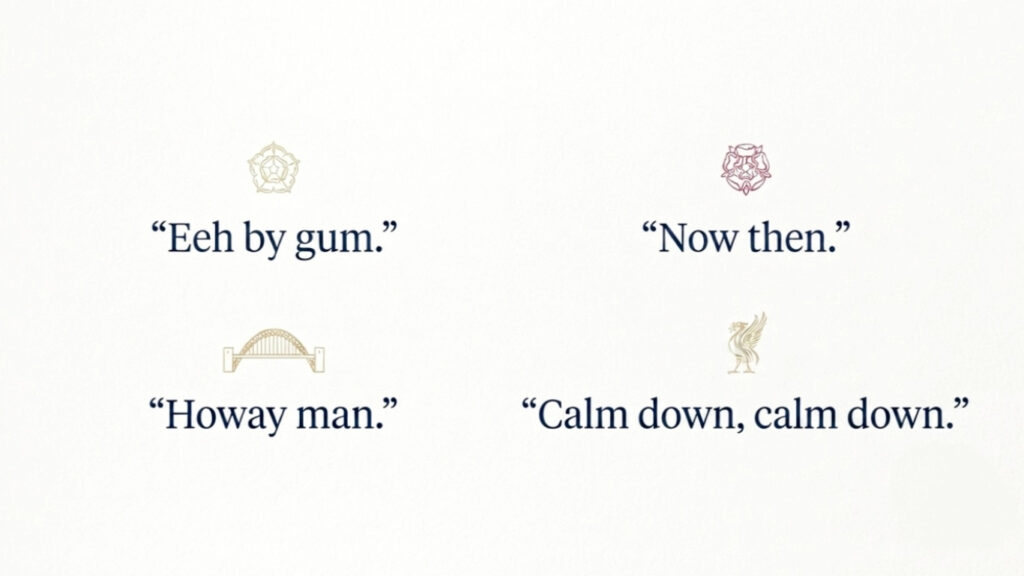
Most people recognise the North of England as having the most amazing green spaces and a rich industrial heritage. However, it also has an incredibly distinct and diverse linguistic identity. While many from around the world and even the Southern part of the country might not be able to distinguish the differences, up here it’s always very clear exactly where you grew up.
There are many sayings we have too that might not always make sense out of context. If you’re one of the many who are often puzzled, you’re not alone. Understanding Northern English can take some getting used to, especially with Viking invasions and the industrialisation of the 18th and 19th century all affecting dialects to some degree.
In our northern dialect guide, we discuss some of our favourite phrases to help get you started in daily conversations, as well as where our strong accents once originated from.
The Roots of the Northern Identity
Before touching on dialects, it’s first useful to understand the history of the region. Northern English isn’t just slang; it’s a remnant of the Danelaw. When the Vikings invaded and settled in the 9th century, Old Norse was thrown into the mix.
The South was mostly influenced by the French-speaking Norman Conquest, which is why the North typically has a stronger connection with its Germanic and Norse roots. This is why you’ll often hear words like garth (yard or garden) and bairn (child) used in the North rather than Latin or French-influenced words. However, this all depends on parts of Yorkshire, and we often understand each other regardless of the words used.
The Most Iconic Northern Words and Phrases
The North has its own language pretty much, with plenty of phrases that aren’t simply just regional slang. They are small parts of Old Norse and previous dialects that we’ve refused to let disappear.
To Southerners, they can sound like a different language entirely. To us, they’re expressions that we use with our nearest and dearest to form connections. Here’s some common Northern England slang still used in day-to-day conversations, and what they actually mean.
1. Don’t be a daft ha’p’orth/’apeth
Trying to explain this to an Italian colleague once was a task in itself as it doesn’t really make any sense even to us. You’ll often hear it from grandparents, particularly those in West Yorkshire. Essentially, it means a ‘halfpenny worth’, so a very small amount of money, which roughly translates to stop being silly. We use it if someone is worrying about something very trivial and needs to relax.
2. He’s soft as a brush
While it’s not something we’d use in day-to-day conversation anymore, you may still hear it used in many old TV shows and sitcoms. Soft is a word we’d use to describe someone who isn’t the sharpest tool in the shed, or the smartest person in the room. You’re basically calling someone slow or naive.
3. You’re mitherin’ me
This is something that is commonly used across Greater Manchester and Lancashire but migrated to us in Yorkshire too. You’re basically telling someone they’re being a pain or pestering you unnecessarily. You’d use it in irritation to tell someone to leave you be.
4. Give o’er
This one doesn’t need much explanation. You’d use it when someone tells you a surprising story, and it is a way of expressing shock.
5. She’s/He’s all mouth and no trousers
If you’ve ever heard someone who often makes empty threats or talks a big game, yet does nothing about it, you’d say they’re all mouth and no trousers. They’re harmless, but they do love to go on about things.
6. Ey ‘up
One of the most popular go-to’s for anyone in Yorkshire. It’s our way of saying hello and can be linked back to Old Norse languages. Other common ways of saying ‘hi’ in Yorkshire include ‘Nah Then’ and ‘How’s Thee’.
7. You alright?
This one we wouldn’t think would need much explanation. However, after chatting with many people down safe, we were proven wrong. If it comes from the mouth of a Northerner, you’re only asking if the person is well – it’s a greeting. Those unfamiliar can sometimes see it as asking if they’re physically or mentally okay or sarcastic.
8. Scran
While it was once used to mean food that was cheap and easy to produce, we now use it to mean any meal. Usually when you’re off out to a restaurant, you’ll say something like “Shall we get some scran?” It’s said that it comes from the Old Norse word ‘skran’ to mean ‘junk’, but others think it was used as the word for ‘bill’.
9. Howay Man
This phrase is completely reserved for Geordies and isn’t really used anywhere else in England. It can mean to ‘hurry up’ but is said a lot when showing distaste in something, similar to ‘come on’. If you’ve ever watched Geordie Shore, you’ll know exactly what we mean.
10. Ginnel
This word causes quite the debate across the UK and is only really used up here. Any sort of thin alleyway in between houses or streets would be called a ginnel. We even have a street in Harrogate called The Ginnel that is lined with bars.
11. Sound
This is a fairly modern phrase used in areas of Manchester (often pronounced ‘sarnd’ but also across the whole of the UK). It has nothing to do with actual sound and simply means something is good or cool. However, you can also use it sarcastically if you don’t particularly like an answer.
Why Do Northerners Sound Like They Do?
Northern accents are very different compared with each other. Someone from Liverpool can be distinguished from those in Yorkshire relatively easily. Although you’ll find we have some shared sounds that separate us from the rest of the country.
While the rest of England changed vowel pronunciation during the late Middle Ages, we held onto the older sound of vowels (called the Great Vowel Shift). For example, Northerners will pronounce words like ‘water’ and ‘grass’ with a sharp ‘a’ sound similar to the original pronunciation.
In the South, they elongate this ‘a’ sound, which is what often sounds posh to tourists. The same goes for the ‘u’ sound. We will often pronounce the letter with a prominent ‘u’ sound, whereas the South leans more towards an ‘o’ sound.
Explaining the Regional Northern Accents
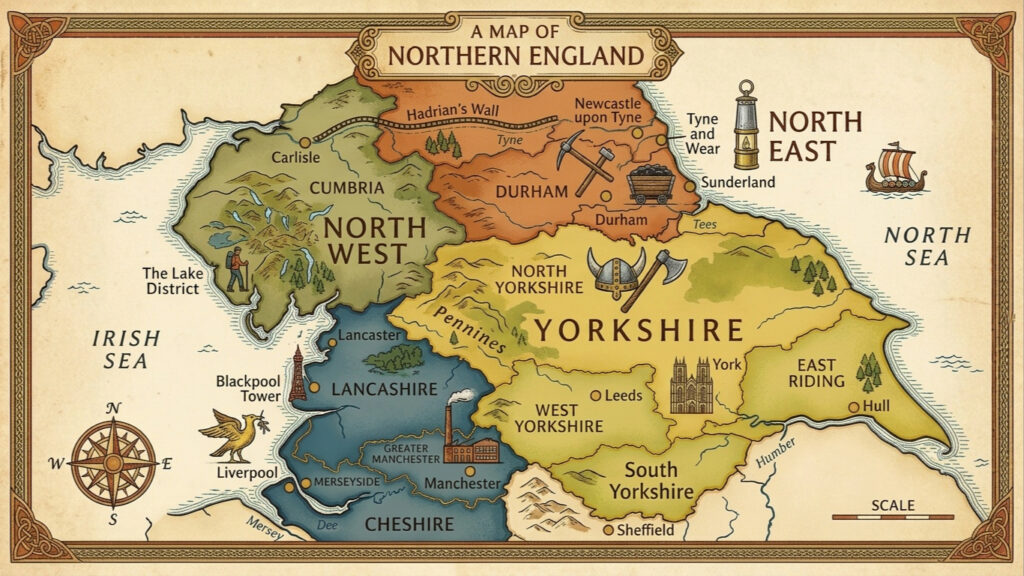
Ask anyone in the North of England what a ‘northern’ accent is, and they’ll probably say Yorkshire. However, there isn’t just one; there are numerous accents that all come with their own quirks, sounds, and independent sayings.
It’s easy to find yourself wondering why the Scouse accent sounds so different from its Lancashire neighbours, the same way Leeds and Harrogate are worlds apart. We take a look at why this might be.
Geordie (Newcastle/Tyneside)
The Geordie accent is quite melodic in nature, similar to Scandinavian languages. This makes a lot of sense given it is strongly influenced by Old English and the Angles. The term Geordie is thought to come from those who supported King George during the Jacobite rebellions.
It sounds so different compared to everywhere else in the UK because Tyneside was quite isolated many years ago, both culturally and geographically. This is why it kept its Anglo-Saxon sounds while the rest of the country adapted to more French and London influences.
You can recognise a Geordie from words such as gan (go) and divvent (don’t), which are ancient Anglo-Saxon words. Not just something people created in modern day as slang. Other unique pronunciations include words like cup and book, which are both said with an ‘oo’ sound instead of the typical ‘uh’.
Scouse (Liverpool)
Another distinct accent in the North that many can’t quite understand where it came from. Liverpool is a place we know and love, so we can understand locals with ease, although others may have more difficulty.
It’s a language in itself, often fast-paced and highly inflected. The ‘t’ is usually soft and ‘k’ sounds throaty, similar to French. The origins of Scouse are said to come from Irish immigrants who came to England after the potato famine. Their speech patterns and existing Lancashire dialects, along with Welsh influences and the maritime trade bringing international sailors to the port are the reason why the accent still remains to this day.
Yorkshire (Broad North)
What we could consider the best accent in the UK (biased of course). It is quite short and sharp, and misses the endings of words, similar to some Latin American countries. The t sound in words like ‘water’ and ‘pattern’ is replaced by a catch in the throat, called ‘T-glottalling’. This is something a lot of Southerners find tough to replicate.
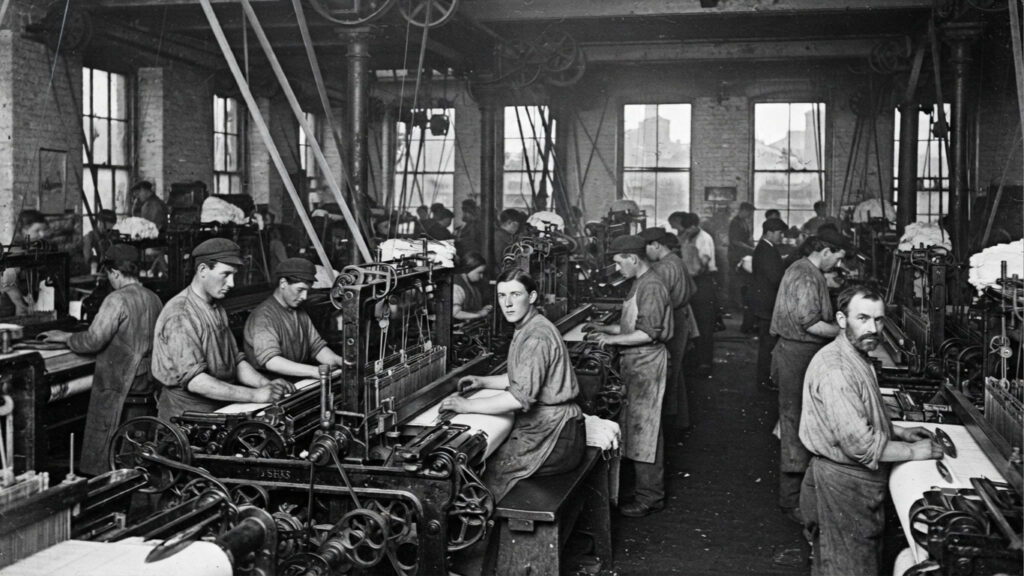
While the Vikings left their mark on our vocabulary, it was the industrial mill towns that resulted in the rapid, efficient speech. In order to be heard over the loud noise of machinery, workers had to develop a form of vowel clarity and soft consonants.
The variation in Yorkshire accents again comes down to geography and social migration. For example, those from Harrogate sound very different to people from Leeds, Barnsley, Hull, and Sheffield.
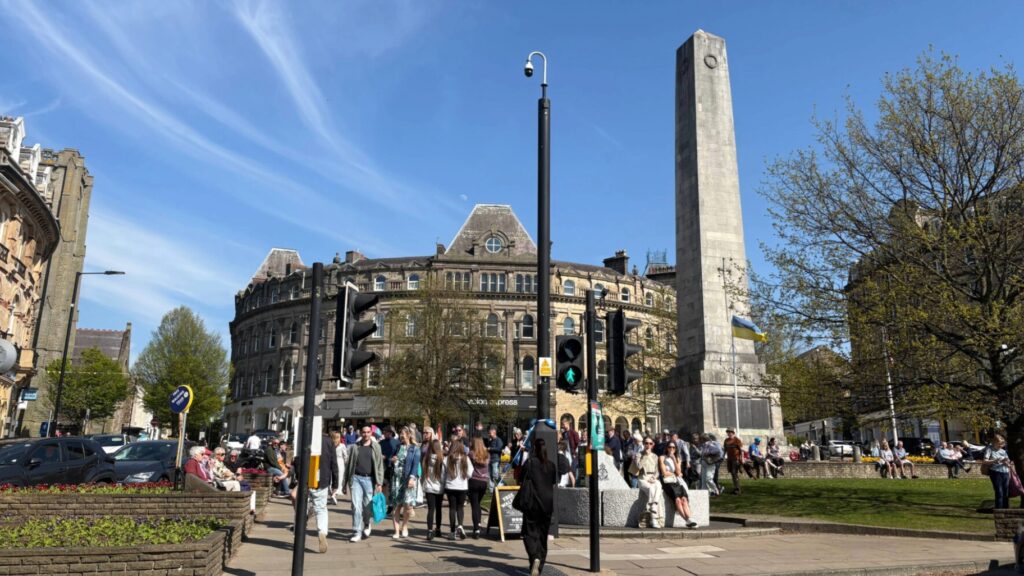
Many call the divide the Humber-Ribble Line. This suggests the North and East Yorkshire remained more Northern due to stronger influence from Northumbrian and Old Norse dialects. However, the West and South developed a sort of Midland hybrid and a contrast of dialects. People ended up mixing sounds to communicate effectively in crowded factory towns.
You’ll now often hear people in Barnsley sound much broader since it was a coal-mining town that resisted the influence of standard English longer. Whereas Leeds became a hub for businesses and different cultures, so it is more general. The Harrogate accent is referred to as the poshest. This is because its history as a spa town attracted a higher class of people compared to the West Riding.
Mancunian (Manchester)
A much flatter-sounding accent of the Lancashire dialect, the Manchester accent has a nasal intonation that rises at the end of sentences. It originated from the Industrial Revolution, when the population increased. The accent is a blend of Lancashire and Cheshire dialects mixed with those of immigrants from Ireland, Wales and Europe who all moved there for work.
You will hear some varieties, though, depending on where you are in Greater Manchester. The North still uses vowel distinctions, whereas these now aren’t as present in the South.
Lancashire
The Lancashire accent can only be distinguished from Yorkshire by natives or fellow northerners. To many, they sound the same, but there are some strong dissimilarities. For example, Lancashire has more rounded vowel sounds, and they don’t clip their words.
Since the two regions are separated by the Pennines, Lancashire developed its own dialect from its agricultural and weaving traditions. It’s a lot more similar to Middle English dialects of the Northwest.
FAQs About Northern Dialects
Is the Northern Accent Dying Out?
Not at all. In fact, this is far from the truth. While accents are starting to sound more similar in major cities like London, the North tends to be much more resilient. In small villages and rural towns, local dialects are more prevalent than ever. We’ve also seen Northern TV shows dominate media, such as Adolescence, Happy Valley, The Northumbria Mysteries, Emmerdale, and Coronation Street.
Why Do Northerners Often Drop the ‘t’ in Words?
This is something us northerners hear a lot, and honestly most have no idea why. It’s called T-glottalling and is essentially a linguistic shortcut. Many believe workers in coal mines and weaving mills would replace the ‘t’ sound with a quick catch in the throat for ease of hearing over the loud machinery.
However, others think that it just evolved to prioritise ease of articulation. Regardless, it stuck, with many areas in Yorkshire still speaking this way (including ourselves!).
Are Northern Accents Harder to Understand?
No, this all comes down to exposure. Some may find Scottish and Irish accents more difficult, for example. The more you become accustomed to unfamiliar vowel patterns and rhythms, the better you will be able to understand these accents. This is like learning any language; you need to speak with natives from those regions, watch more TV shows with characters with northern accents, or listen to podcasts.
What is the Difference between a Dialect and an Accent?
An accent is how words are pronounced (the sounds). A dialect includes the unique sounds and vocabulary used by people in a specific region. The North is well known to have both highly distinctive accents and unique dialects that can often sound like a separate language.